OHLA USA, Inc. performed this $380 million design-build contract to convert the South Dade Transitway into a state-of-the-art Bus Rapid Transit (BRT) line. The new system, which connects five municipalities, will cut travel times by as much as 30 minutes and increase efficiency along a busy and rapidly growing corridor in Miami-Dade County. OHLA USA’s civil, building, and asphalt divisions aligned their expertise to deliver the project, which included the construction of new stations, the rehabilitation of existing facilities, a new five-level, 645-space park-and-ride garage, and significant corridor and intersection improvements along 20 miles of exclusive right-of-way between SW 344th Street Station and Dadeland South, adjacent to US-1, Old Dixie Highway, and Flagler Avenue.
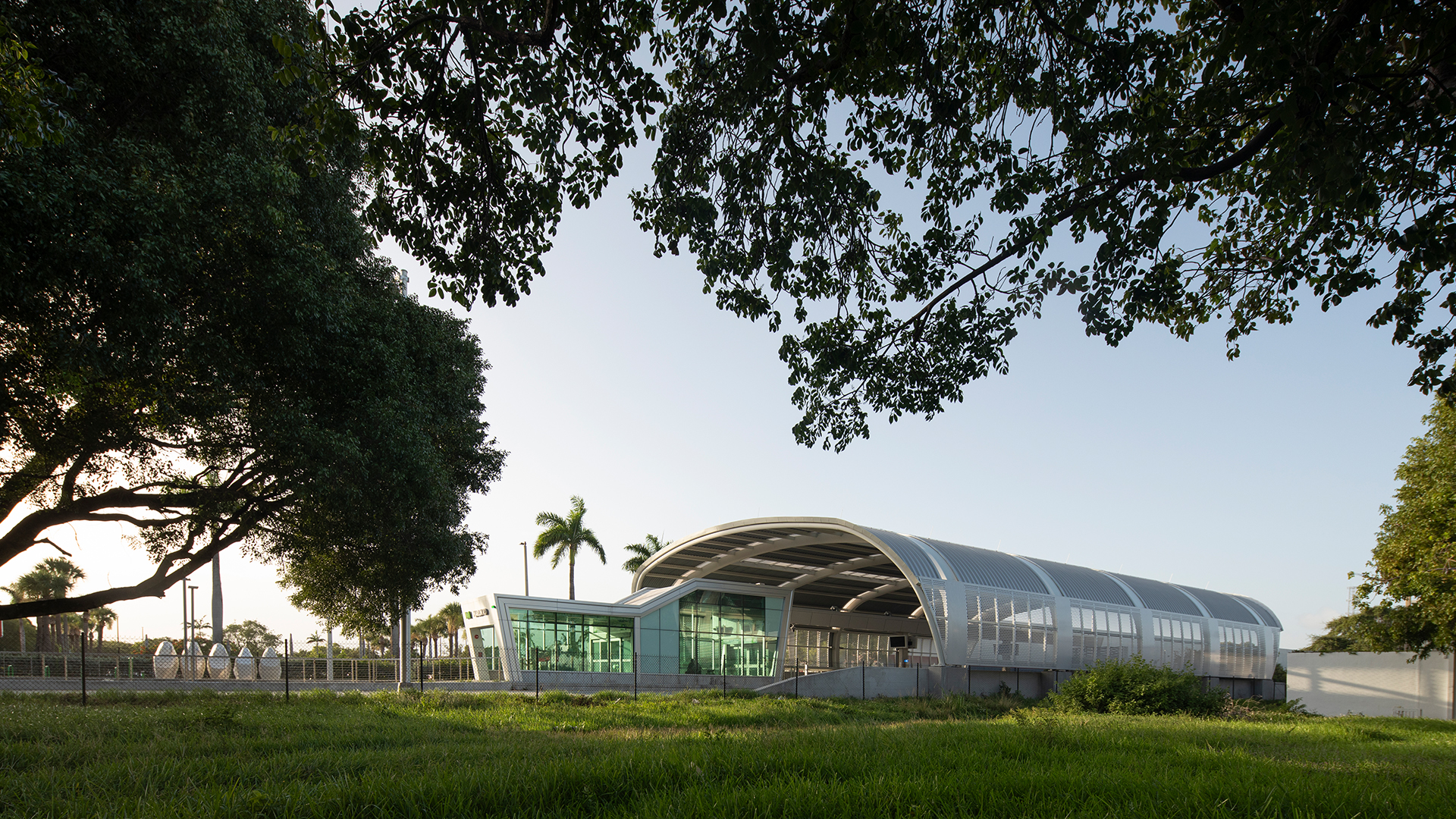
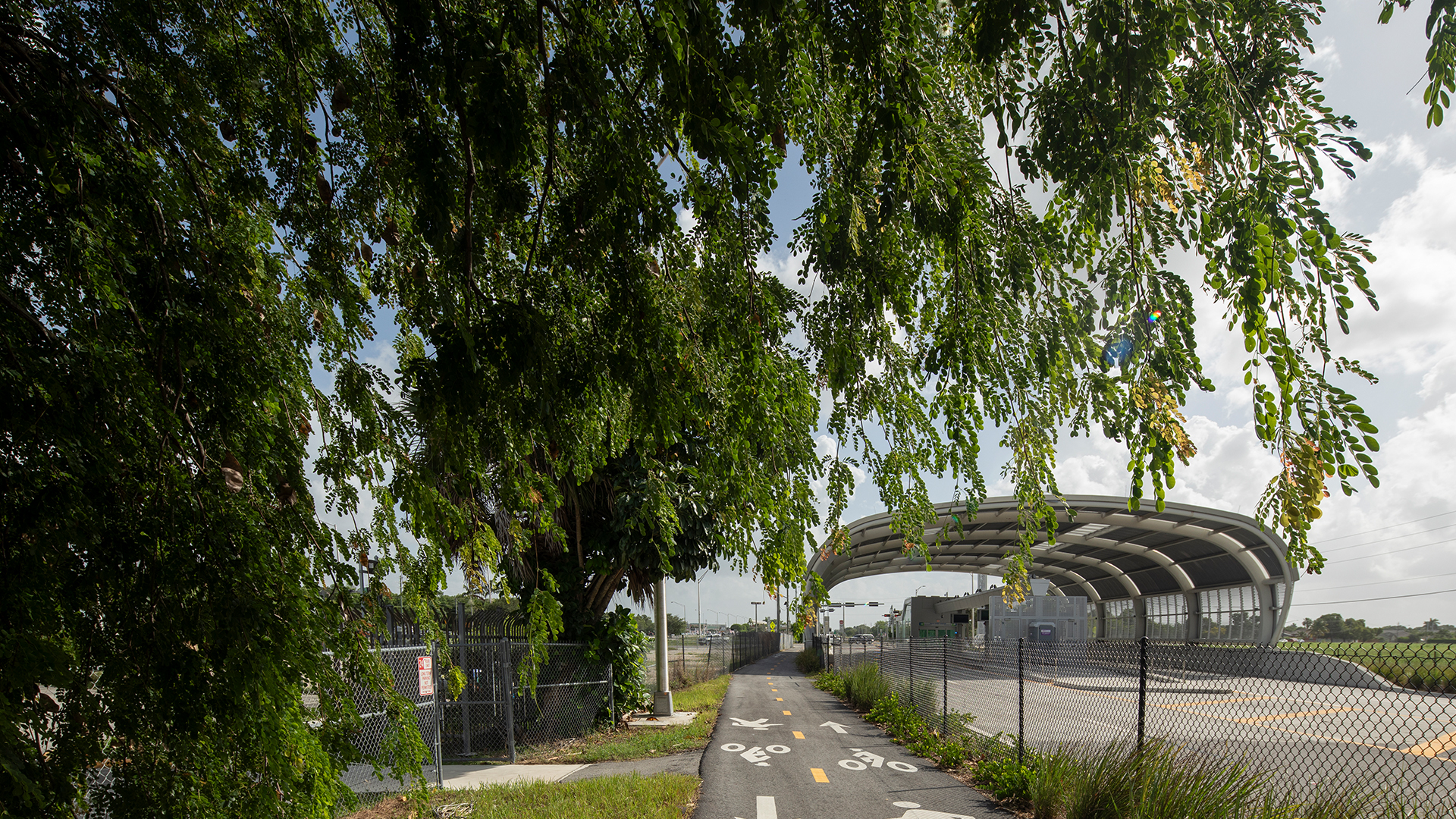
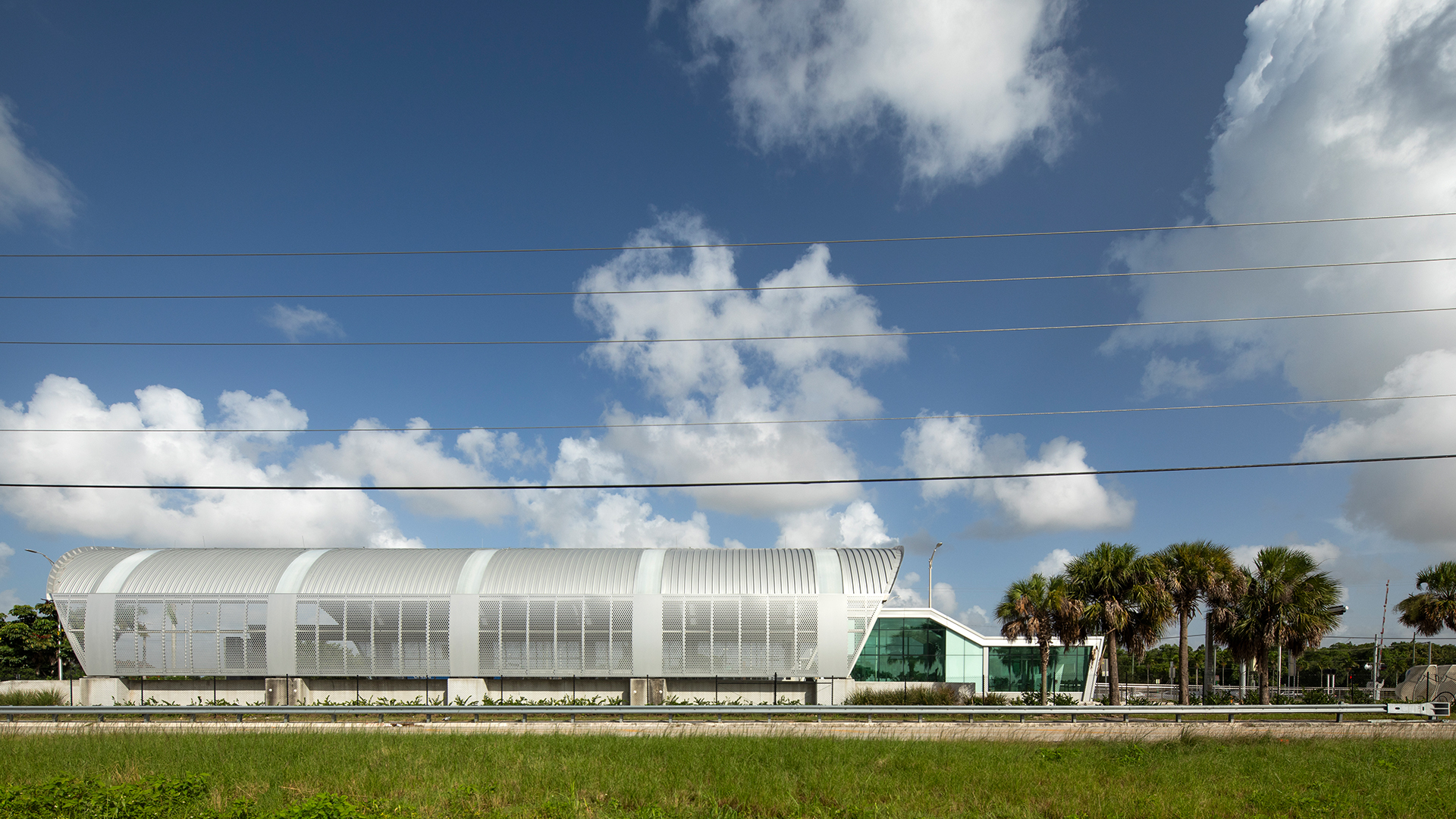
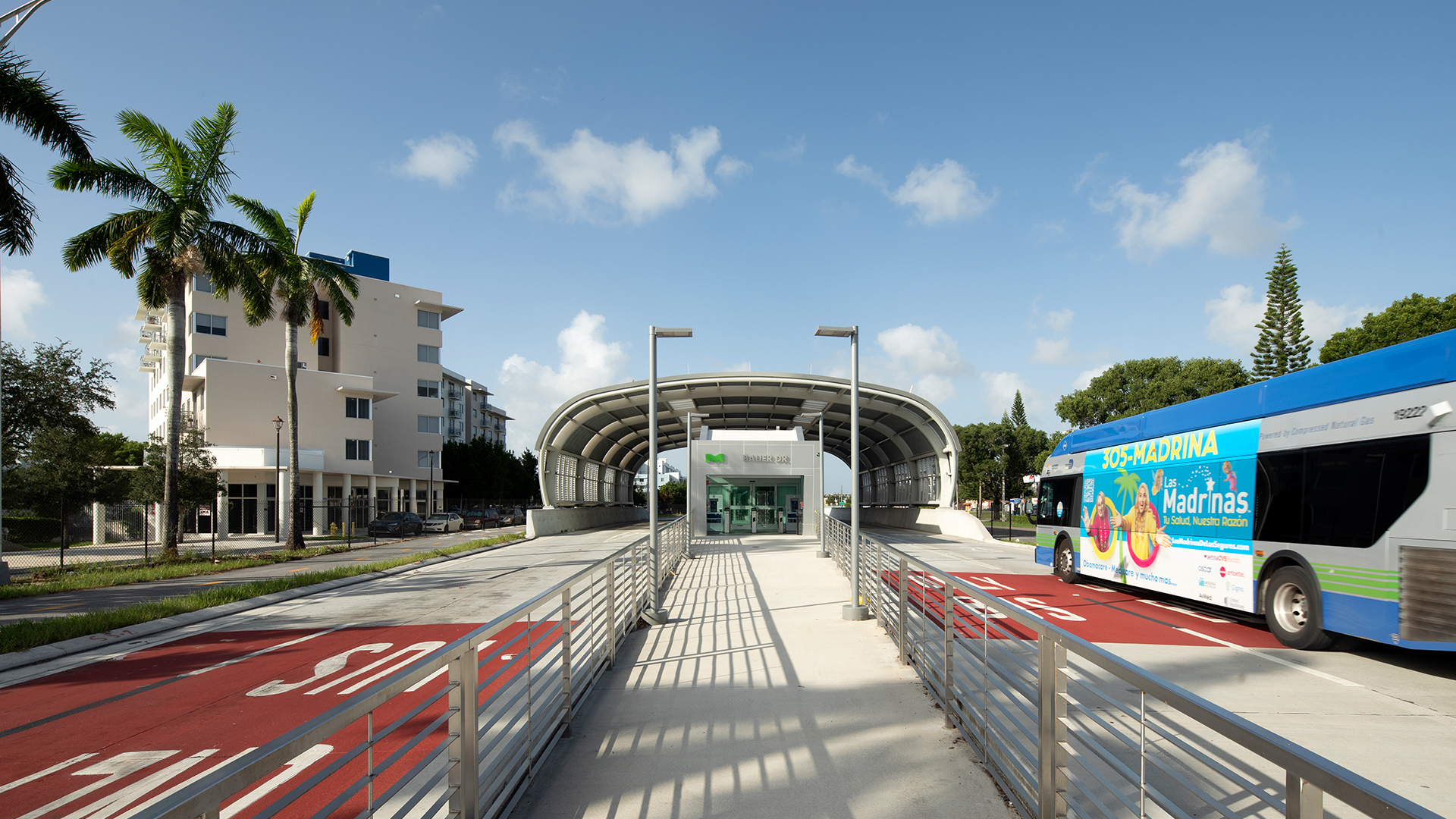
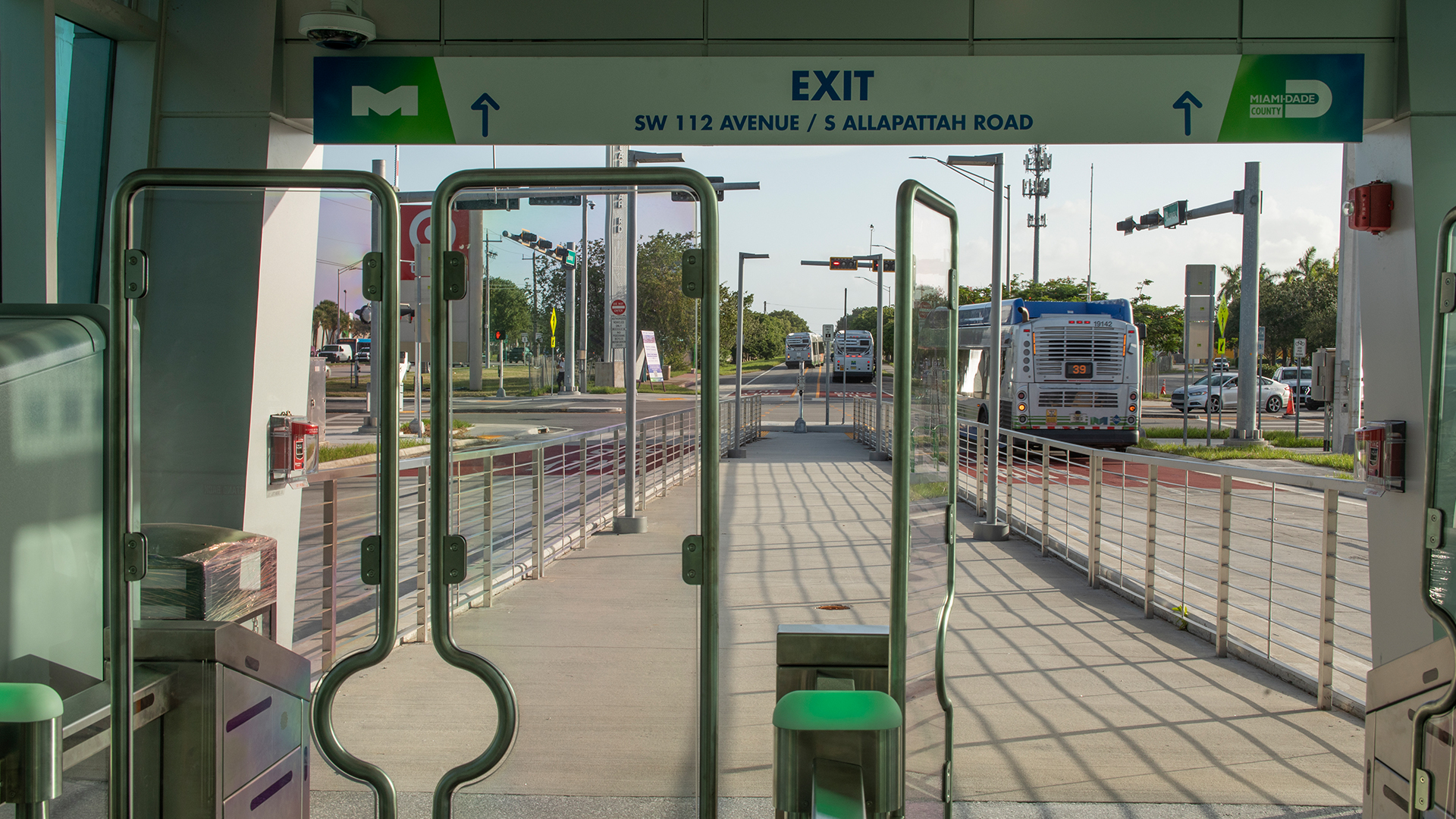
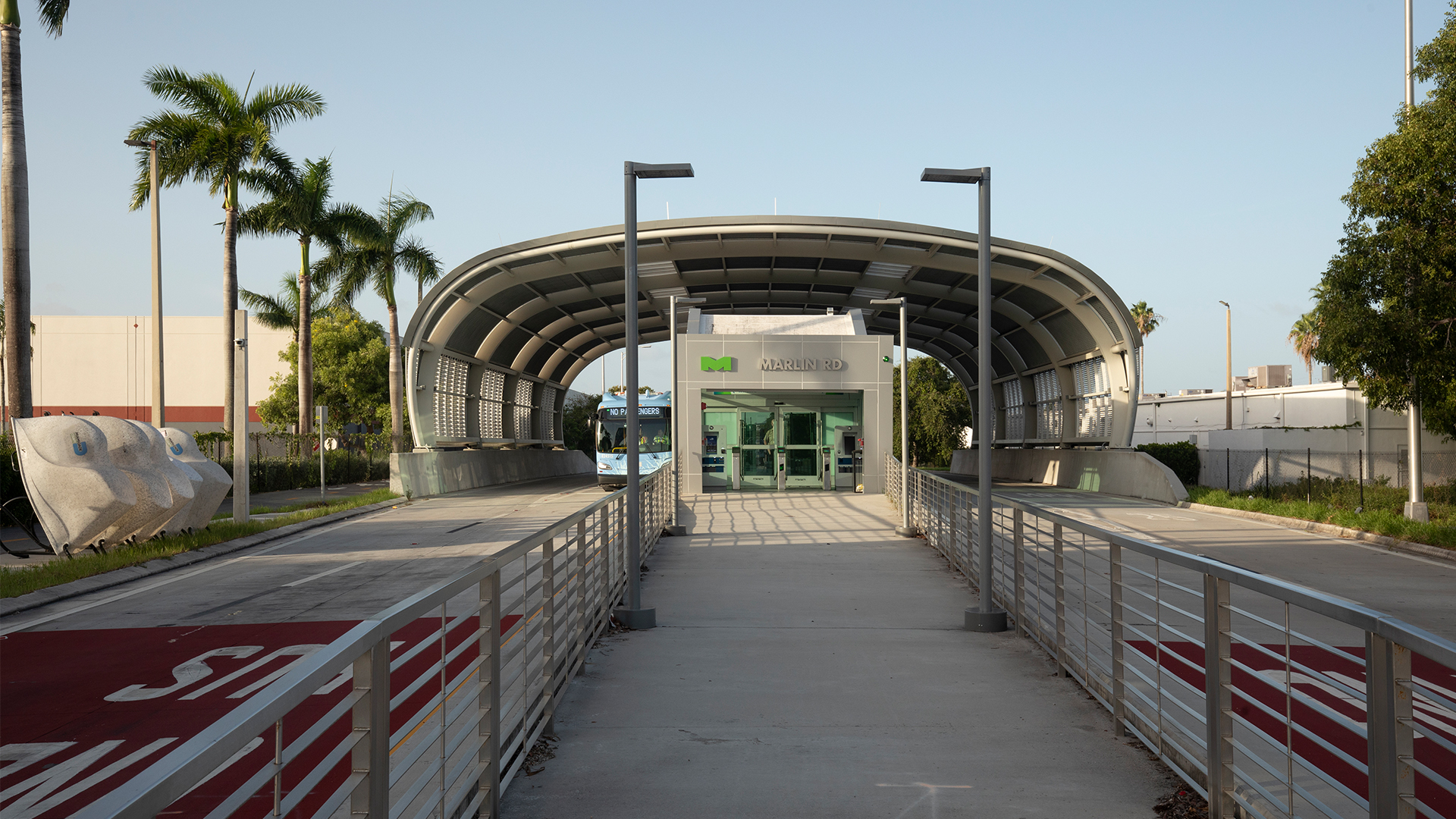
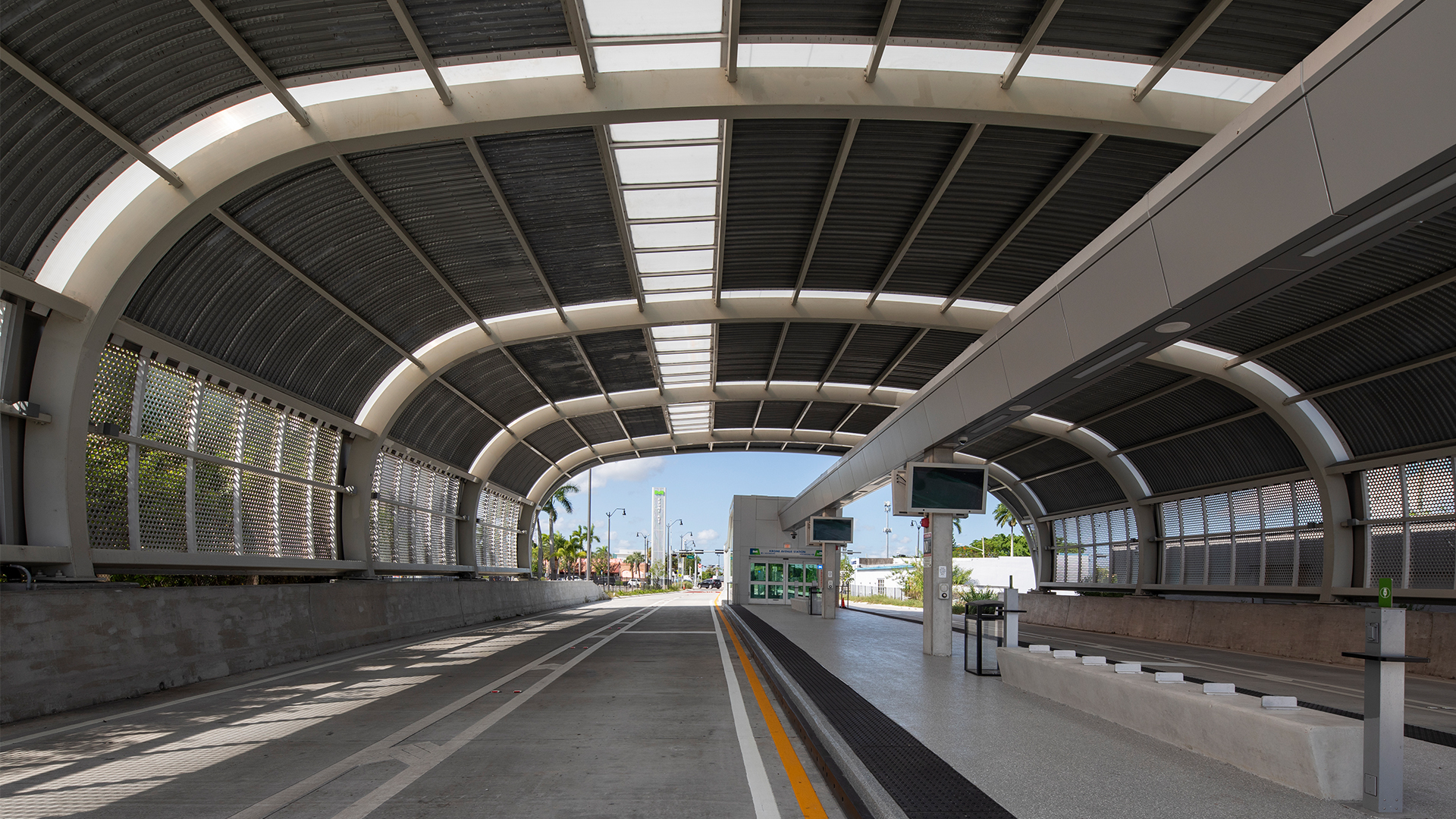
The South Dade Bus TransitWay System features 14 iconic stations, each designed with a distinctive Miami style. These stations incorporate prefabricated elements, including curved metal roofs, illuminated interior pylons displaying station names, and air-conditioned vestibules to enhance passenger comfort. In addition, OHLA milled and resurfaced the entire 20-mile corridor, replacing it with new structural asphalt.
One of the project’s most technically challenging aspects was sourcing a supplier capable of bending 200-foot-long prefabricated steel support beams to meet the project’s unique curvature requirements. After extensive research, the beams were manufactured and transported to Chicago, where the complex bending process was carried out over several weeks.
A hallmark of the project is the integration of advanced technology. The installation of 20 miles of upgraded fiber-optic cable—a task made more difficult by post-COVID supply chain disruptions—serves as the system’s digital backbone. Installed underground through conduit, this network enables seamless communication between all stations, intersections, and control centres.
The system also incorporates traffic signal pre-emption technology, allowing buses to move through 46 intersections with train-like efficiency. As buses approach, safety barriers are lowered and traffic signals are synchronised, enabling uninterrupted passage. To further improve safety and accessibility, every station includes level boarding platforms alongside four dedicated bus lanes.
Designed with future flexibility in mind, the TransitWay is fully convertible to heavy rail should transportation needs evolve over time. This forward-looking approach ensures long-term value, scalability, and adaptability for the region.
Para ofrecer las mejores experiencias, utilizamos tecnologÃas como las cookies para almacenar y/o acceder a la información del dispositivo. El consentimiento de estas tecnologÃas nos permitir? procesar datos como el comportamiento de navegación o las identificaciones ?nicas en este sitio. No consentir o retirar el consentimiento, puede afectar negativamente a ciertas caracterÃsticas y funciones.