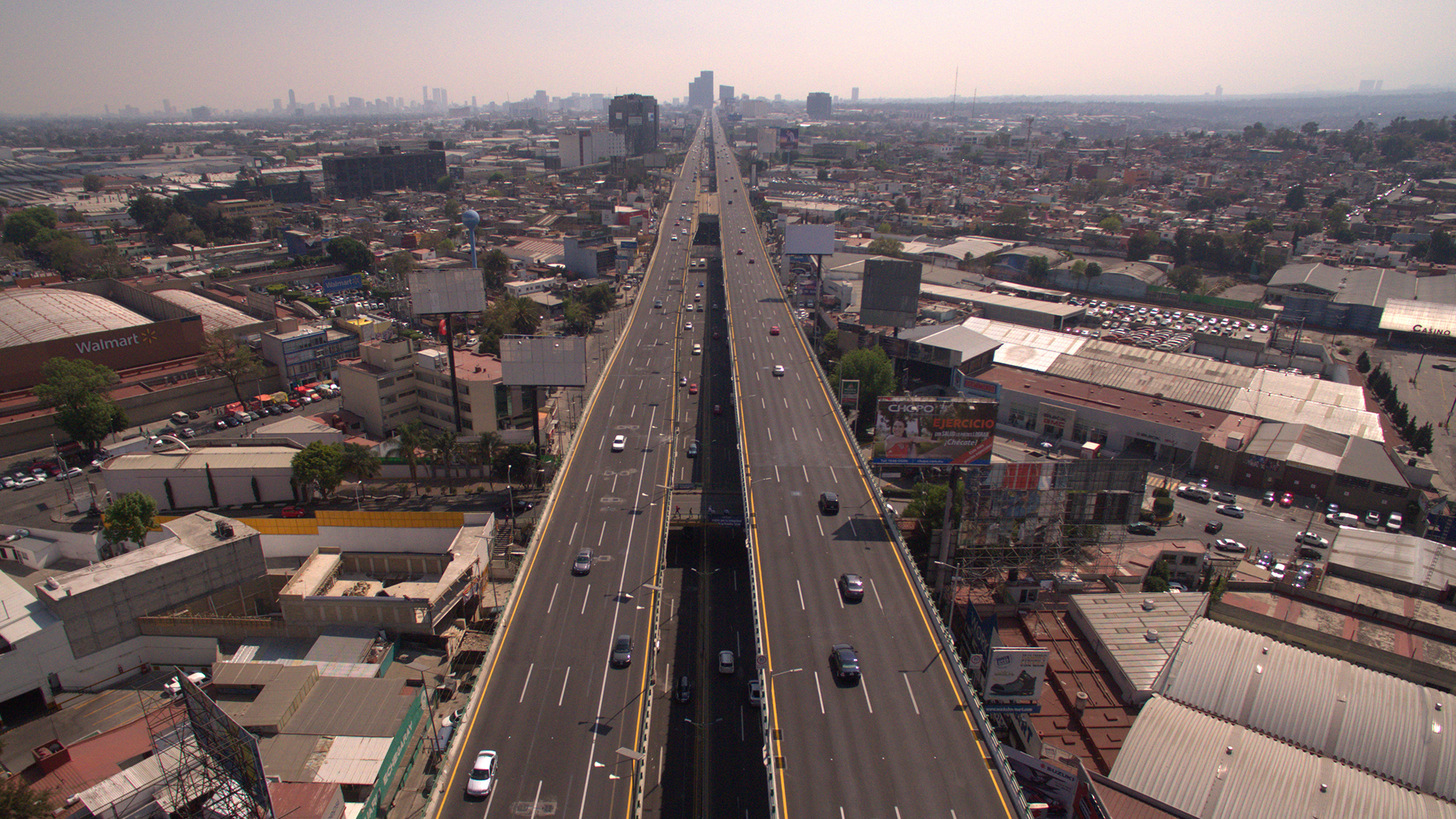
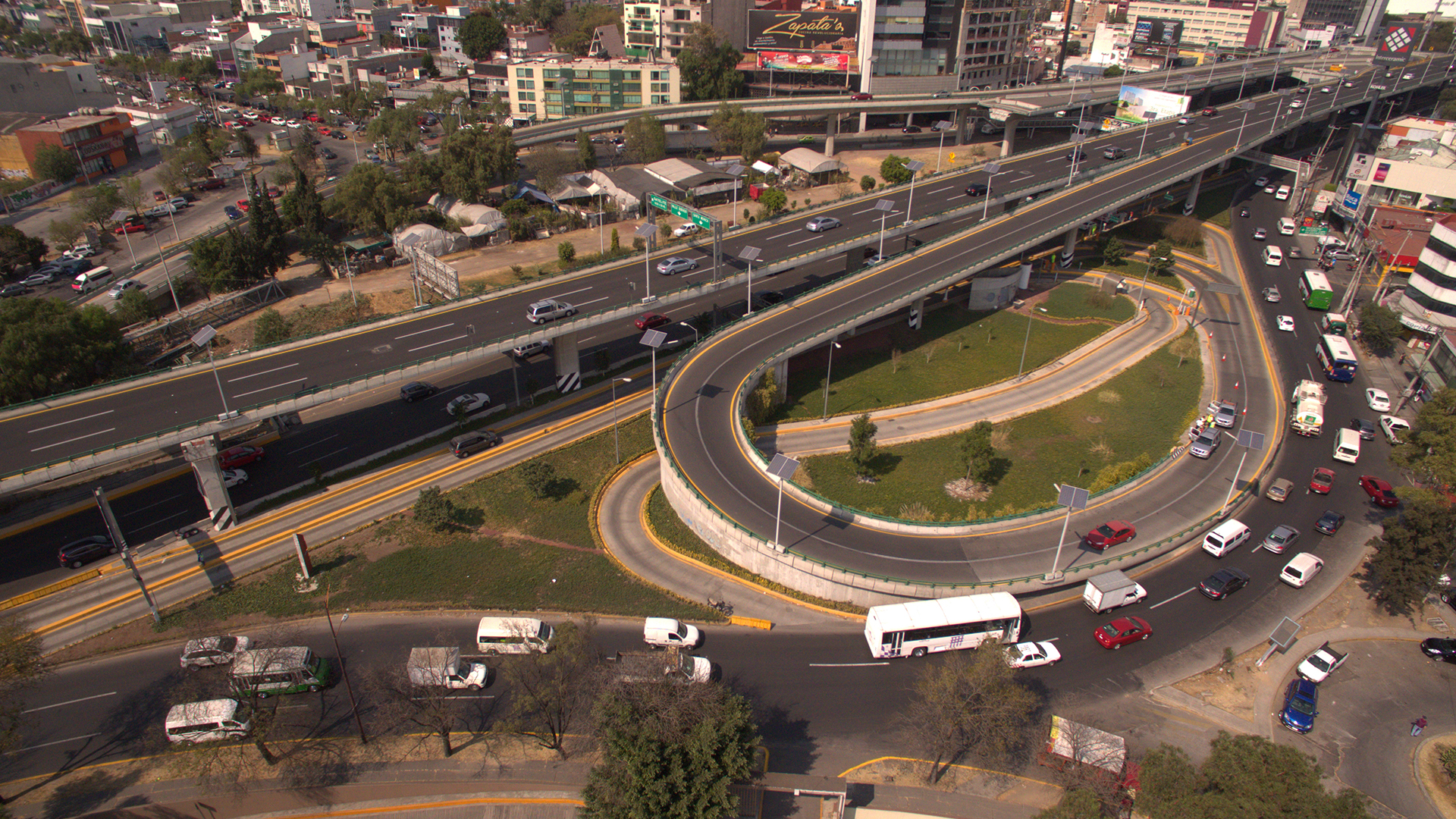
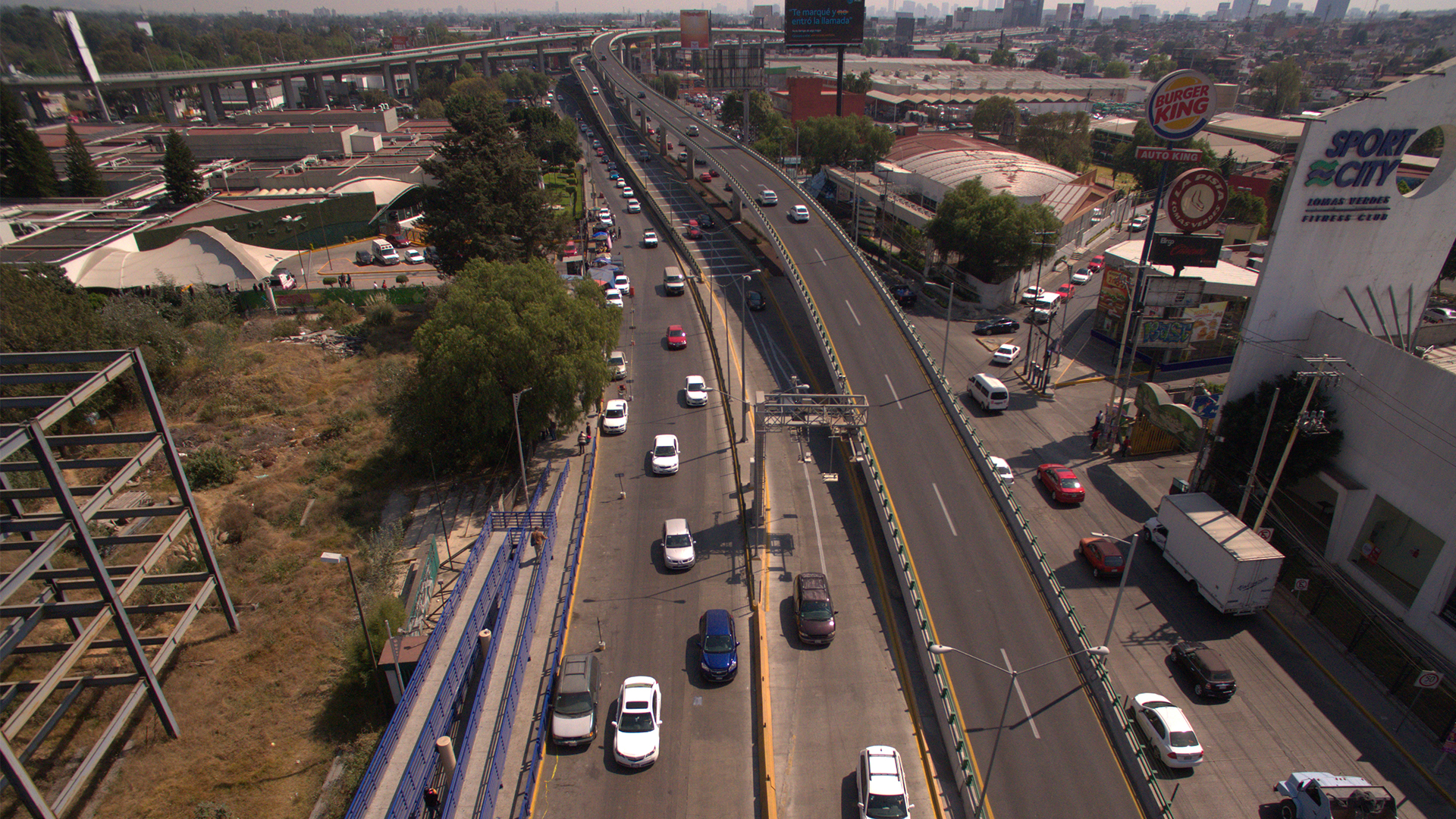
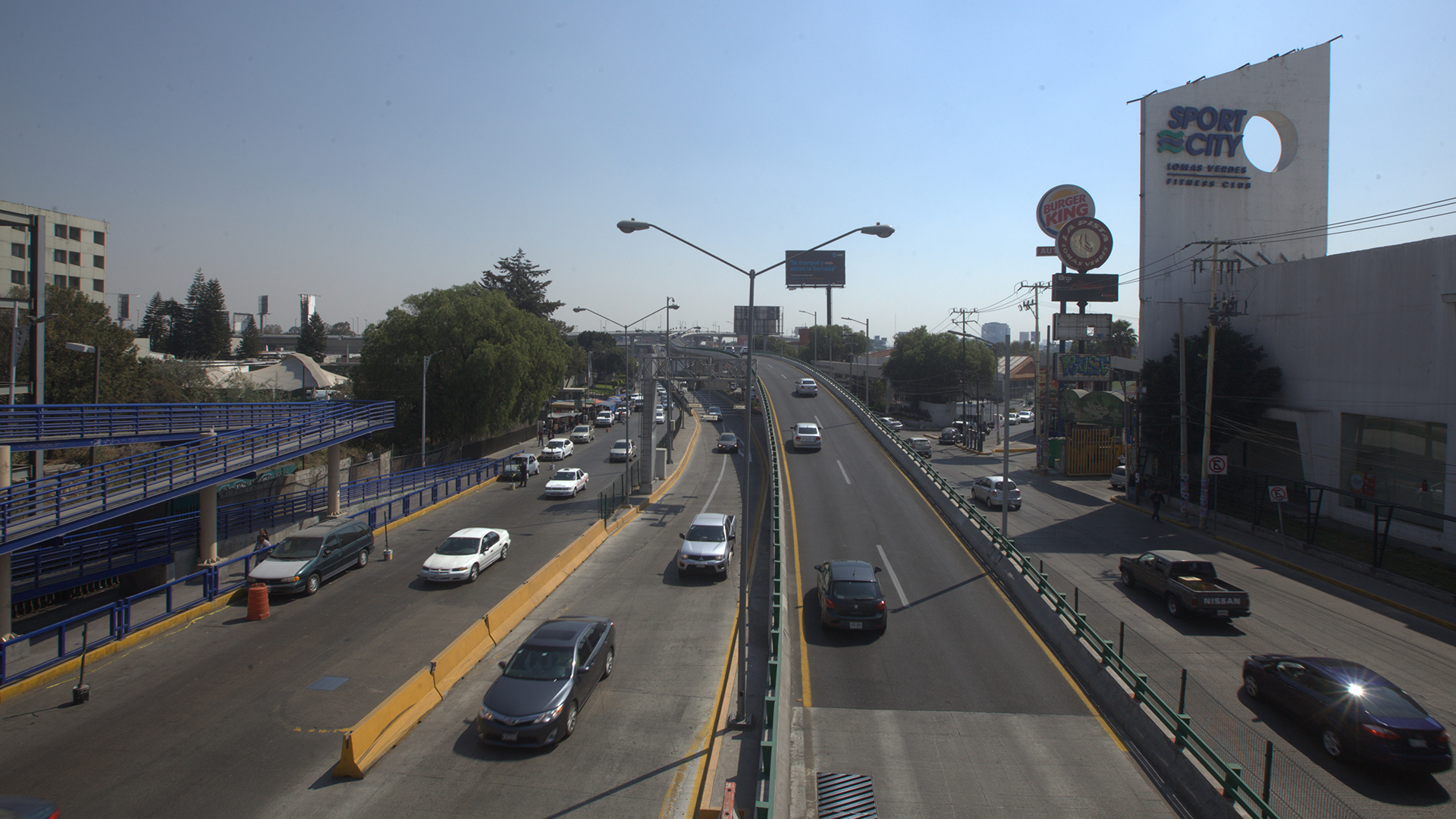
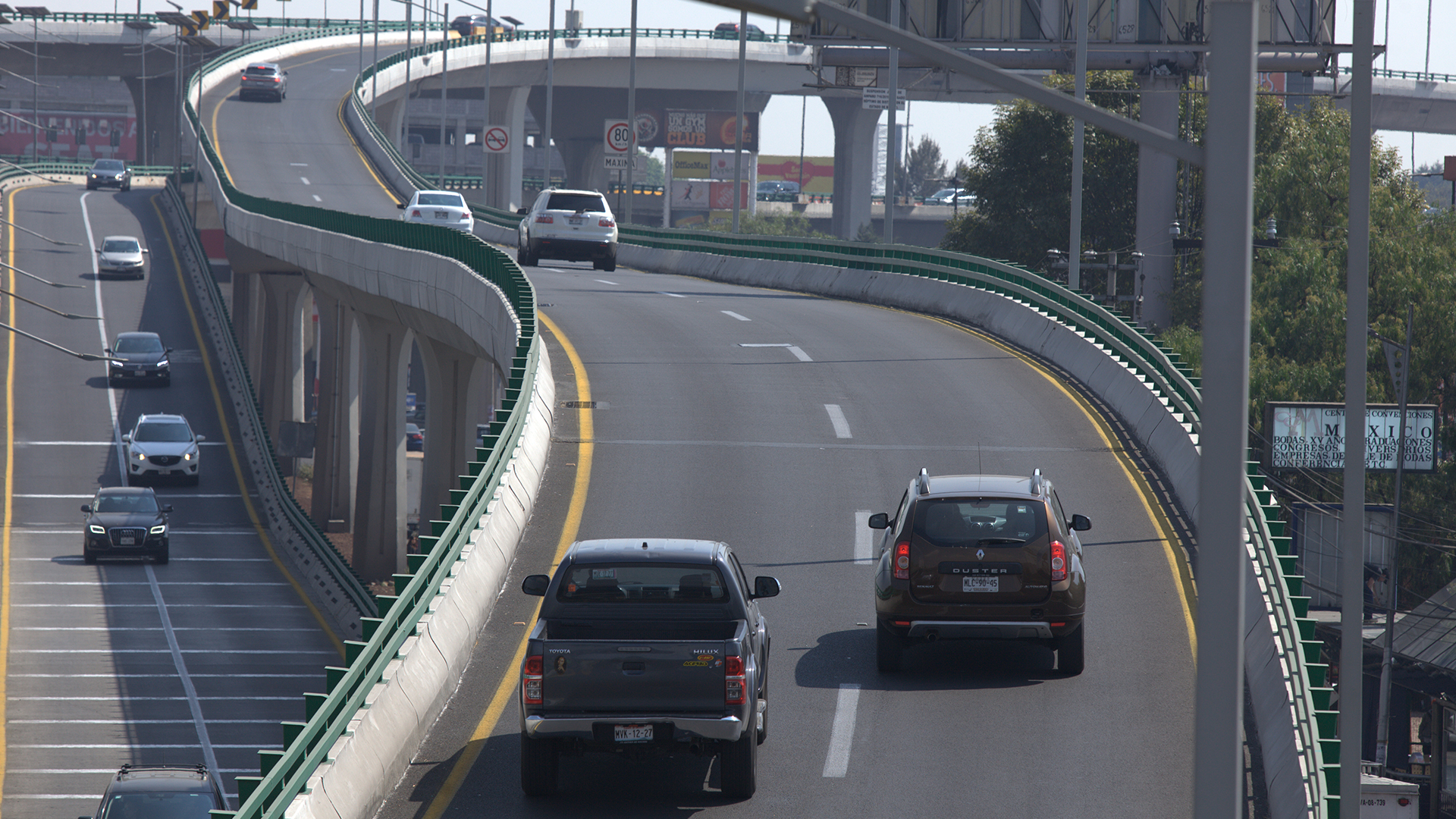
The infrastructure is built above the Mexico–Querétaro highway, along a strategic corridor that connects the country to the north and the United States of America, carrying 300,000 vehicles per day, making it the most heavily trafficked route in the country.
To minimize disruption to daily traffic and optimize construction timelines, the works were carried out using a single night shift, supported by the use of large precast concrete elements.
Due to the area’s high seismic activity, the viaduct’s columns are designed with a greater width in the transverse direction, enabling them to act as inverted pendulums under seismic forces, thereby enhancing the structure’s performance.
It is the first toll road operating within an urban area in Mexico, featuring a reversible traffic system adapted to peak demand. To support this, it is equipped with a state-of-the-art electronic toll collection system, fully automated, allowing speeds of up to 60 km/h, with controlled entry and free-flow detection at exit.
The viaduct is named Bicentenario to commemorate the year 2010, marking the 200th anniversary of Mexico’s independence.
Among its main benefits to the community are improved urban mobility, reduction of pollutant emissions, local job creation, and the minimization of environmental impact, including an energy-efficient lighting system powered by solar energy.