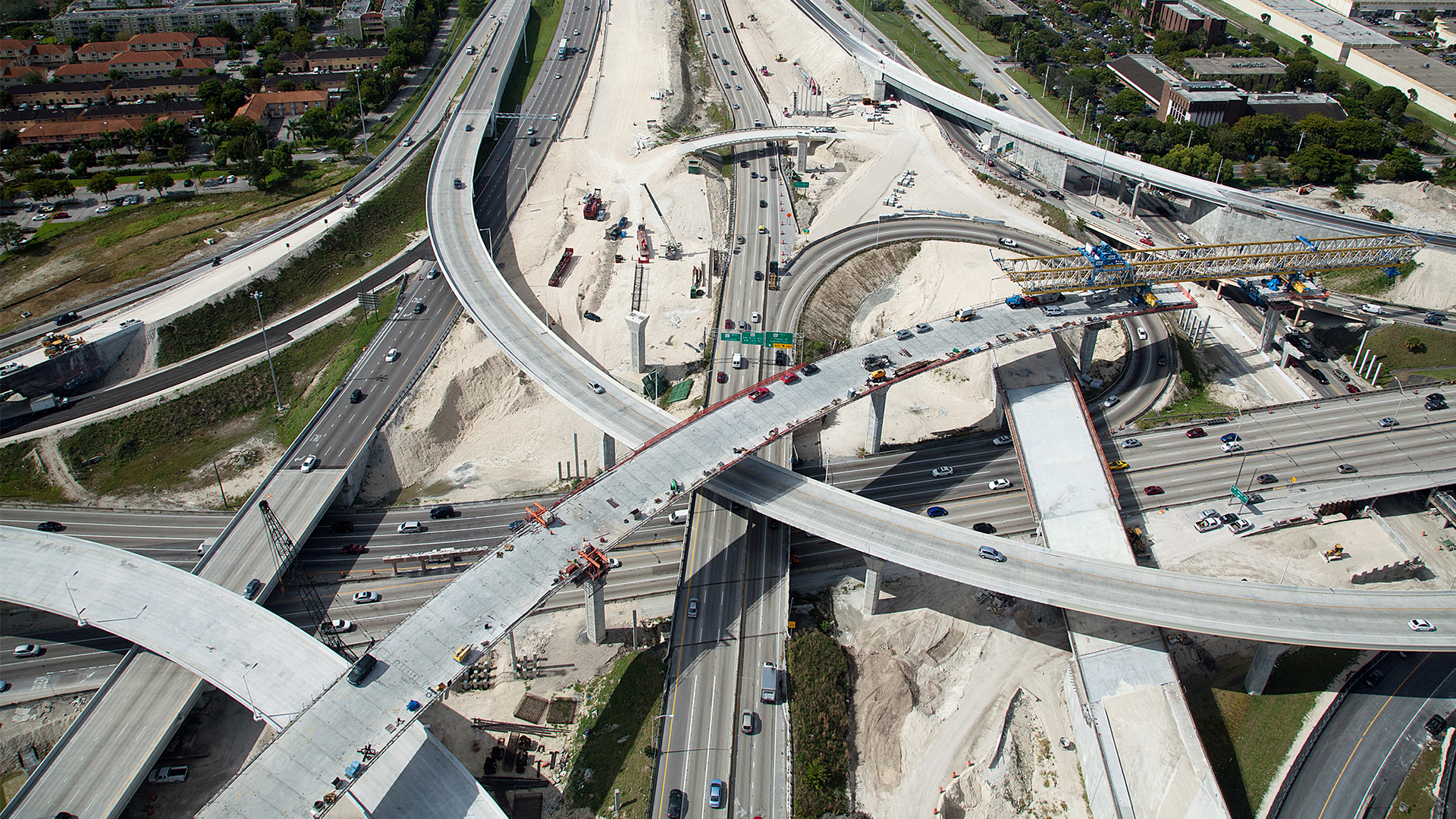
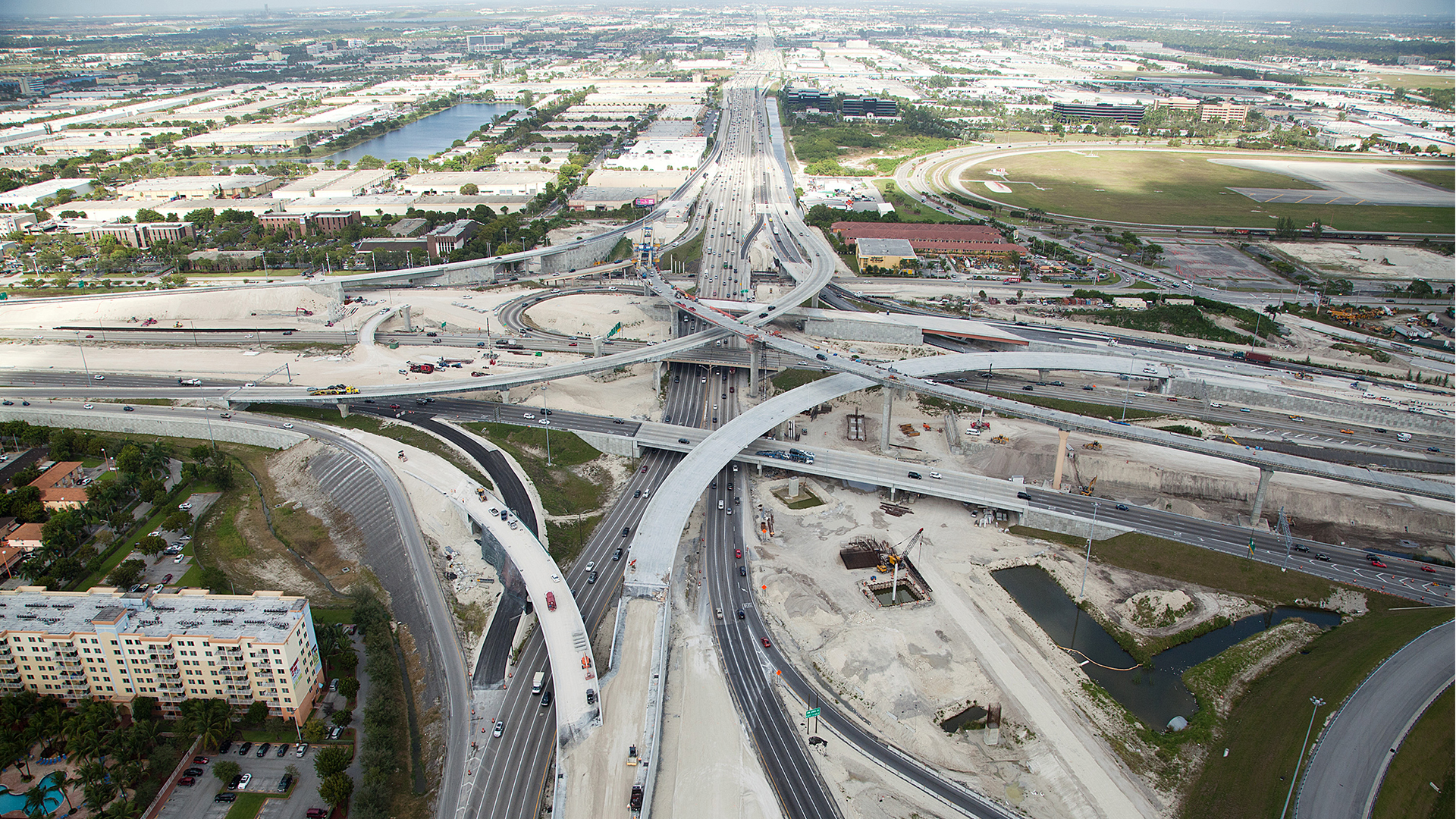
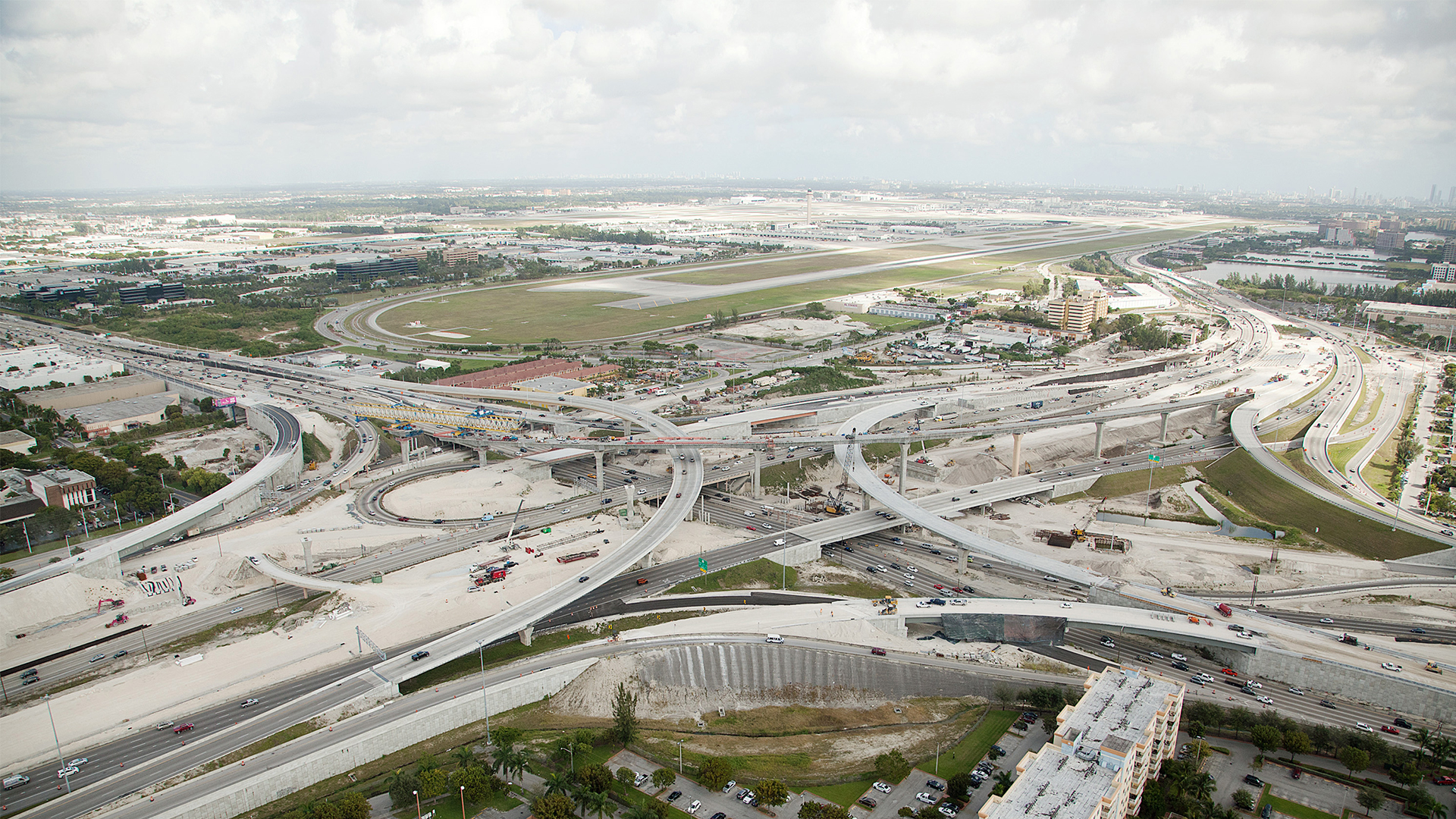
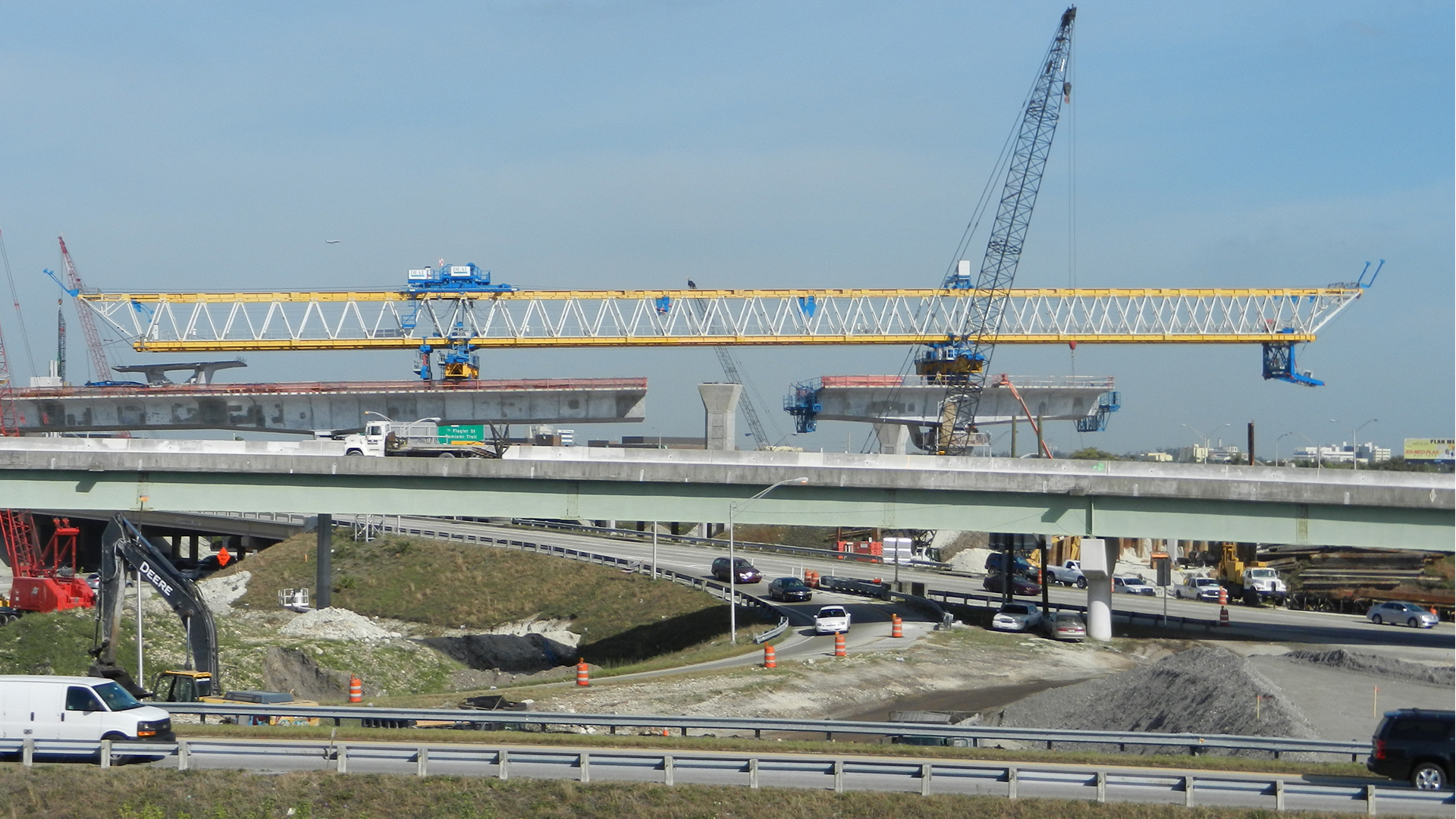
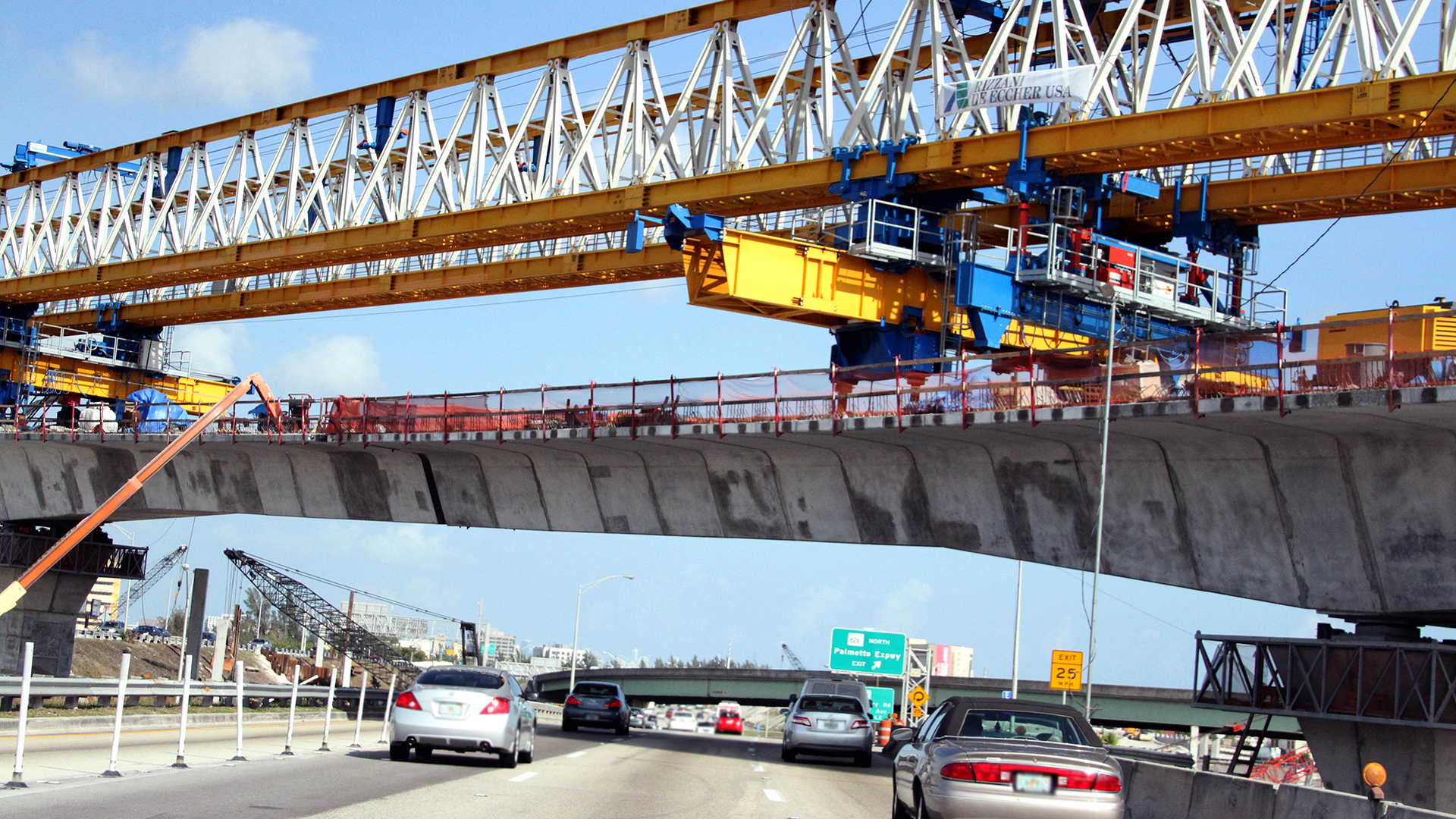
The project involves the construction of four-level motorway interchanges with a height of up to 32 metres, as well as the construction of 34 new bridges of different types. Works also include earthworks, milling and paving, replacement of existing structures, drainage, lighting and signalling systems, landscaping, and the installation of noise barriers to mitigate the impact of the works on the surrounding area.
One of the main construction challenges, in addition to the technical complexity, is delivering the infrastructure while maintaining traffic volumes of approximately 300,000 vehicles per day.
Close to the State Road 826/836 interchange, the project also includes the expansion and improvement of one of the busiest sections of the Florida Turnpike. The section is 5 km long and extends from Bird Road to north of the SR 836 intersection, in northwest Miami.
The expansion includes the construction of 10 traffic lanes, of which the four inner lanes will be tolled. Additional lanes will also be built to facilitate local traffic movements between interchanges. The project further comprises the widening of existing structures and the construction of new ones, including a 200 m overpass providing a direct connection between the new Turnpike toll lanes and SR 836.
Benefits for society
The interchange enables direct traffic movements between State Road 826 and State Road 836 in all directions, without reducing speed, thereby improving safety, capacity and efficiency for users.
New bridges over the future NW 7 Street and NW 82 Avenue will allow for direct connections beneath the reconstructed highway. In addition, the implementation of intelligent transport systems (ITS), including cameras and sensors, will provide real-time traffic information and support the rapid deployment of emergency and response teams to remove disabled or accident vehicles from travel lanes.