
Purple Line
Together with its joint-venture partner, FlatironDragados, OHLA USA is leading the design and construction of a transformative 16.2-mile light rail system with 28 trains and 21 stations, serving the Washington D.C. metropolitan area. Valued at $2.9 billion, the Purple Line project will connect neighborhoods to Metro lines, MARC (Maryland Area Regional Commuter) rail, and Amtrak’s Northeast Corridor—establishing the first direct suburb-to-suburb rail link in the Washington, D.C. region.
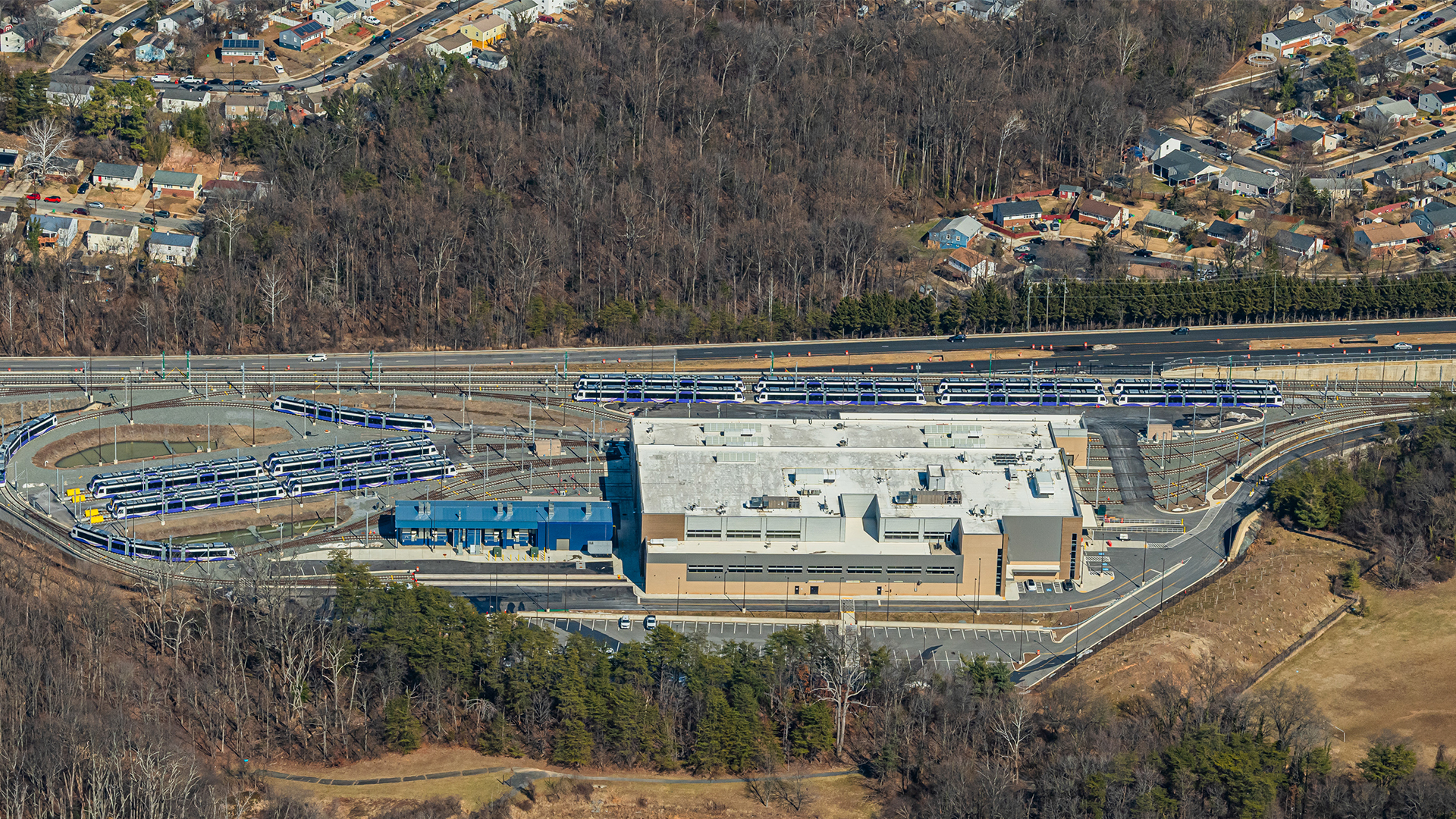
The alignment, which runs east-west between Washington, D.C., and the I-495 Beltway, is predominantly at grade, with one tunnel section, three elevated segments, and multiple bridge structures. Notable infrastructure includes the Glenridge Operations and Maintenance Facility, Silver Spring Transit Center, Plymouth Tunnel, Talbot Avenue Bridge, Bethesda Shaft, and the reconstructed College Park Metro Kiss-n-Ride and Bus Loop. The project also integrates key pedestrian and bike pathways such as the Capital Crescent Trail, Montgomery County Green Trail, and the University of Maryland Bicycle Path.
The light rail will operate primarily in dedicated or exclusive lanes, serving key urban centers north of Washington, DC, including: Bethesda/Chevy Chase, Greater Lyttonsville/Woodside, Silver Spring, Long Branch, University Boulevard, College Park, Riverdale Park and Glenridge/New Carrollton.
The Purple Line is owned by the State of Maryland through the Maryland Department of Transportation and the Maryland Transportation Authority. It is being delivered by Purple Line Transit Partners in a P3 scheme, with Maryland Transit Solutions—a joint venture between FlatironDragados USA and OHLA USA—responsible for design and construction. This marks OHLA USA’s first U.S. light rail project awarded under a concession model.
The track system includes embedded, ballasted, and direct fixation types, supported by an Overhead Catenary System. The project requires extensive stakeholder engagement and close coordination with over 35 state and local agencies, freight railroads, and numerous subcontractors for structural steel, architectural finishes, precast concrete, and reinforcing steel.
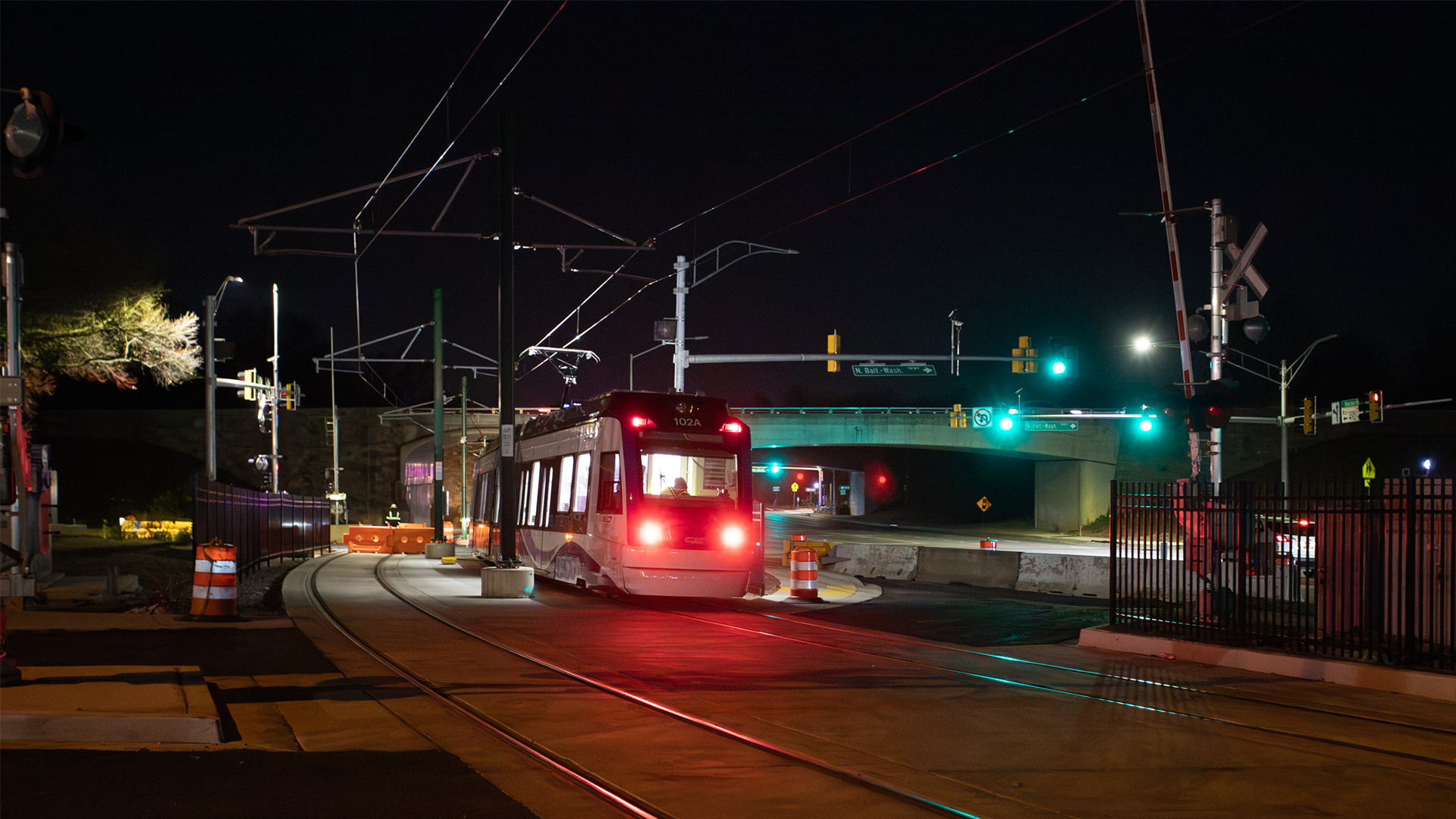
The project presents significant logistical challenges, particularly in high-traffic areas with 53 at-grade crossings involving trains, vehicles, and pedestrians. Limited right-of-way and dense surrounding infrastructure further complicate construction. To mitigate these issues, the team developed a comprehensive phased Maintenance of Traffic (MOT) plan in collaboration with traffic management consultants.
One of the most technically demanding components is the excavation of a new shaft and cavern for the south entrance to the Bethesda Metro Station. This structure connects to a tunnel originally constructed during the Red Line’s development. Working in solid schist rock of the Wissahickon Formation, the team employed precision drilling and blasting techniques to safely shape the underground space. The cavern was excavated in two phases—north and south—using steel bracing, rock bolts, and sprayed concrete to ensure stability.
In Silver Spring, a new light rail station is being constructed alongside an overhead mezzanine and two pedestrian bridges, linking the station to the existing WMATA Metro line and Silver Spring Transit Center. This required extensive foundation and superstructure work, along with multiple retaining walls to support both new and existing infrastructure.
A four-mile stretch of the alignment, including four stations, runs through the University of Maryland campus. Due to academic schedules, most work had to be completed during summer breaks.
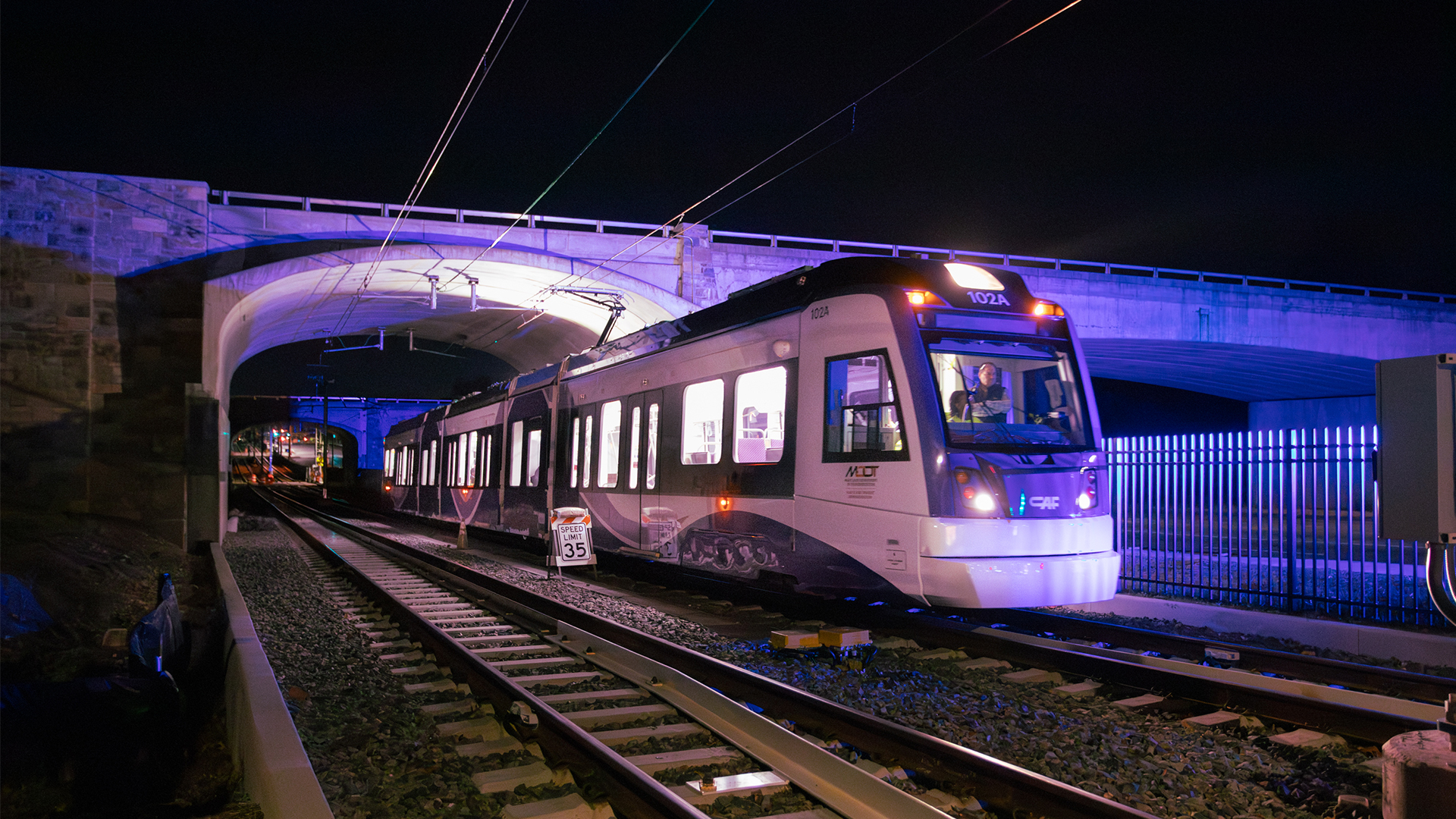
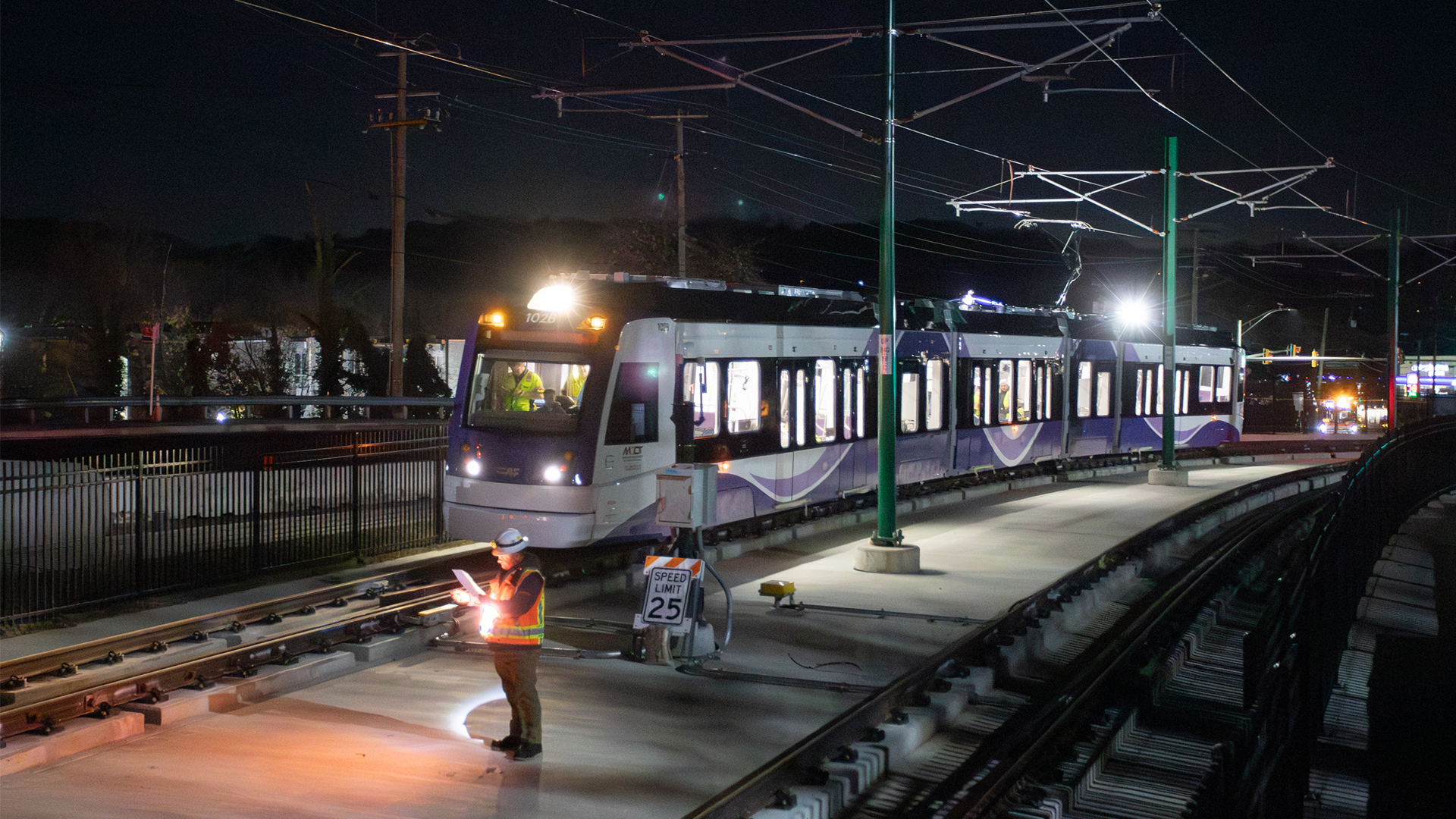
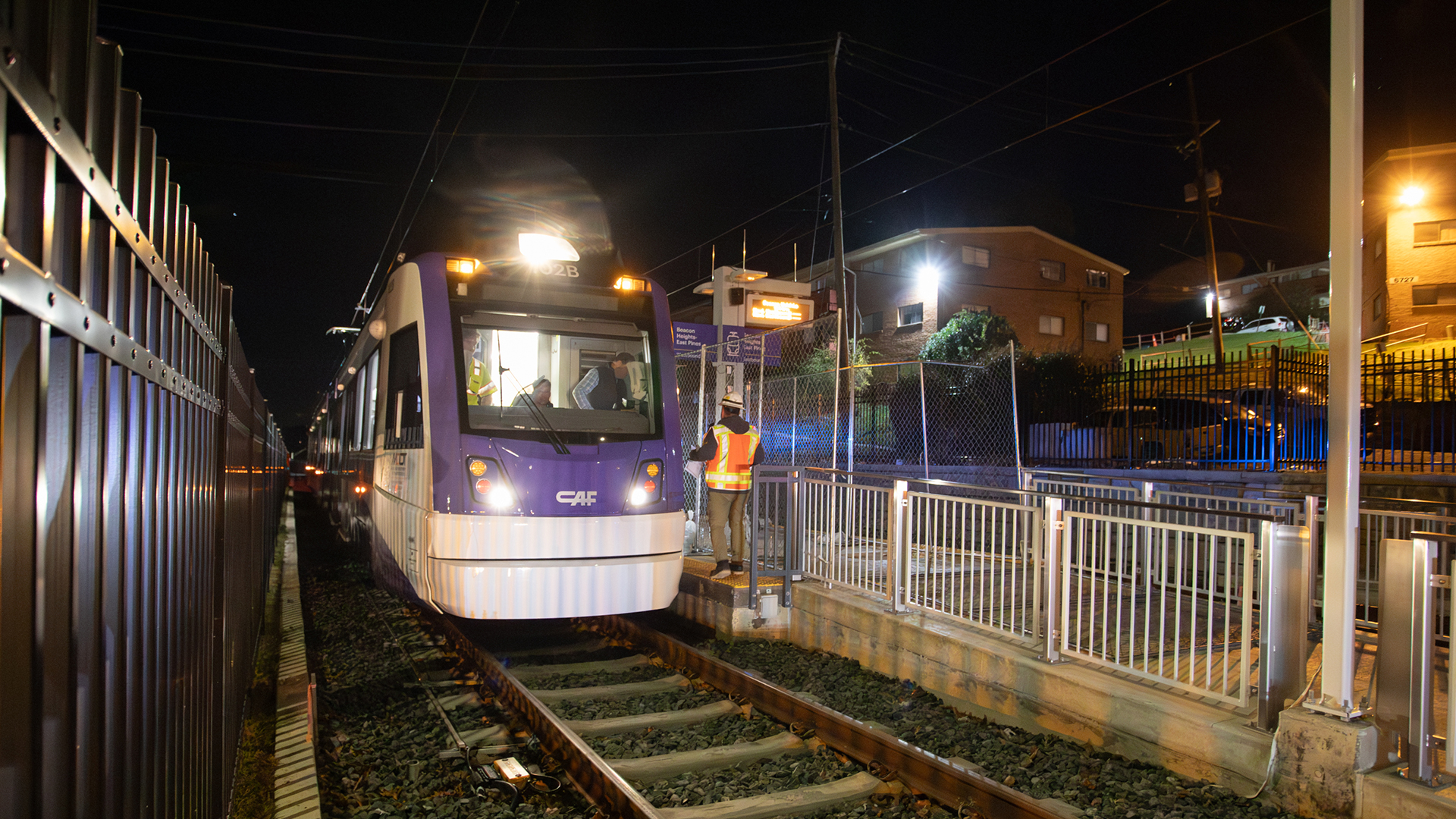
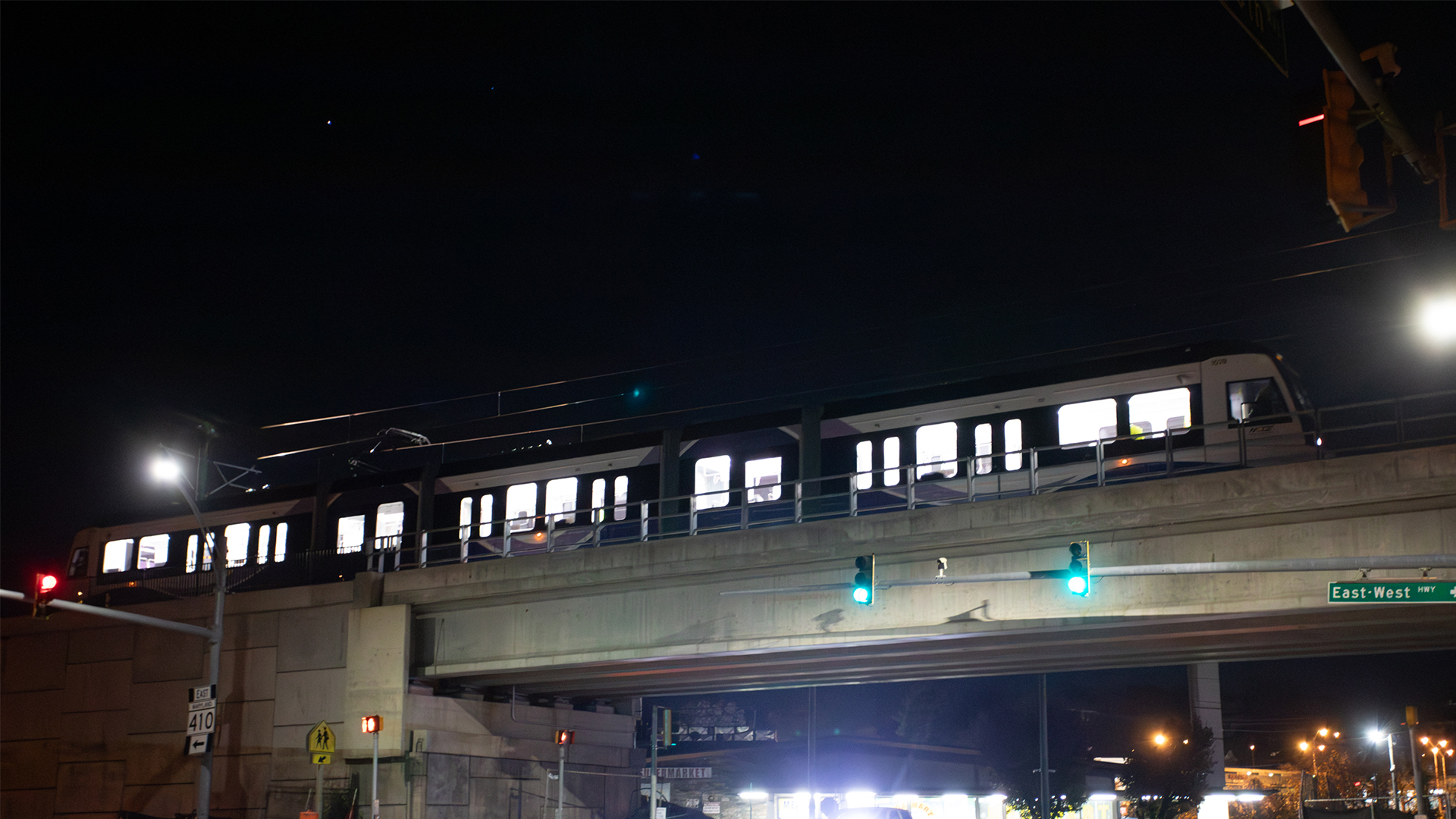
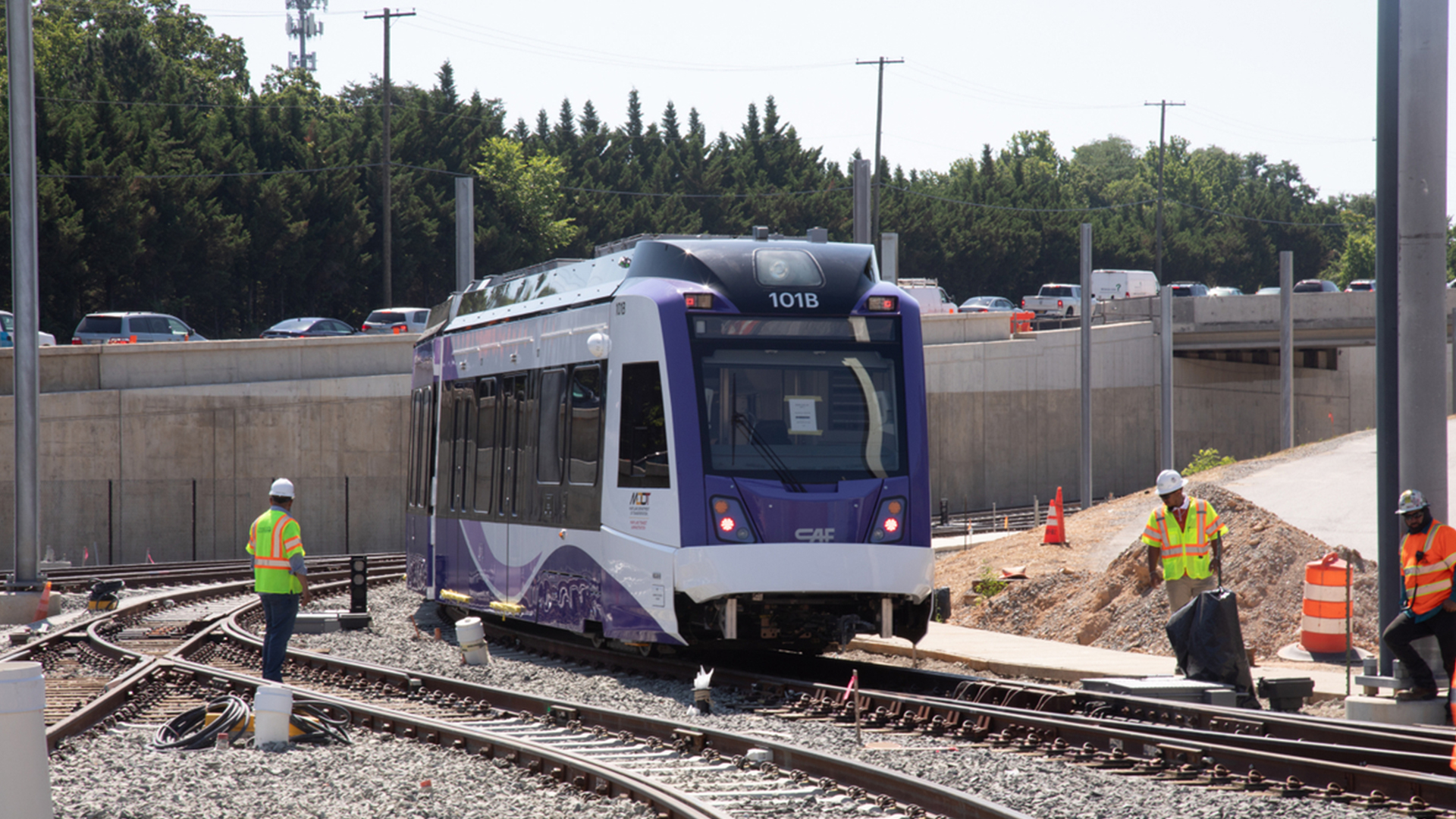
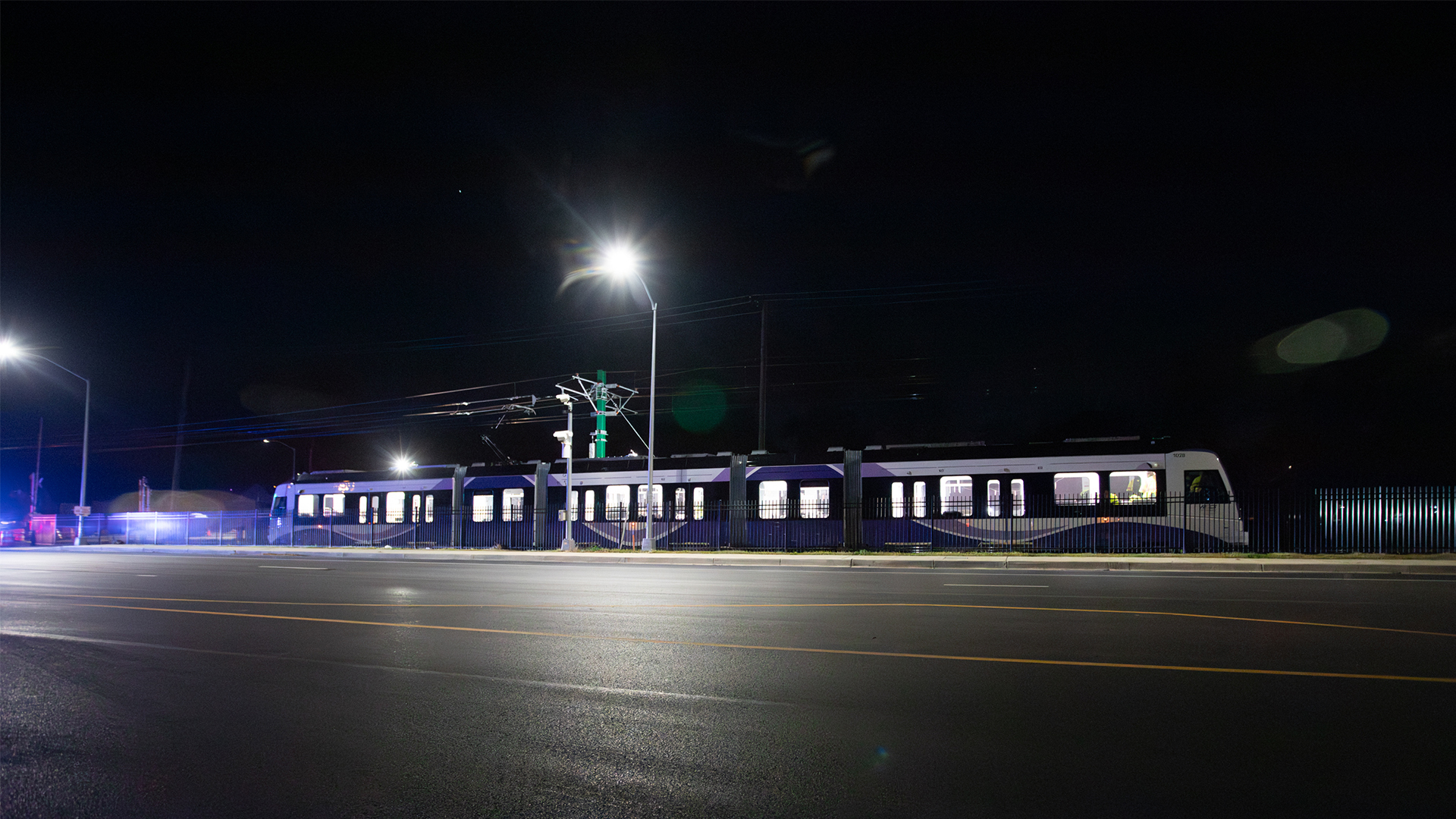
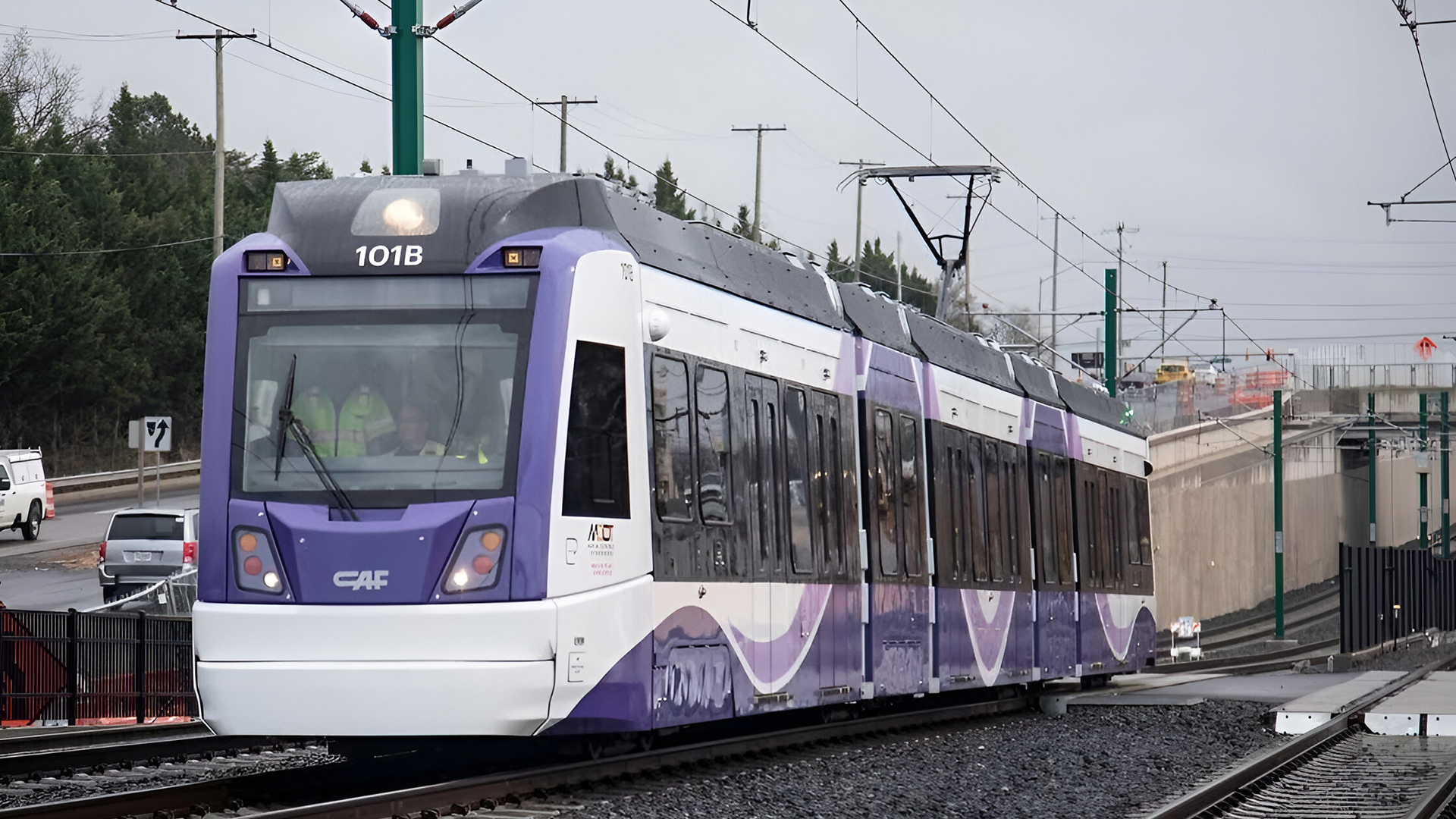
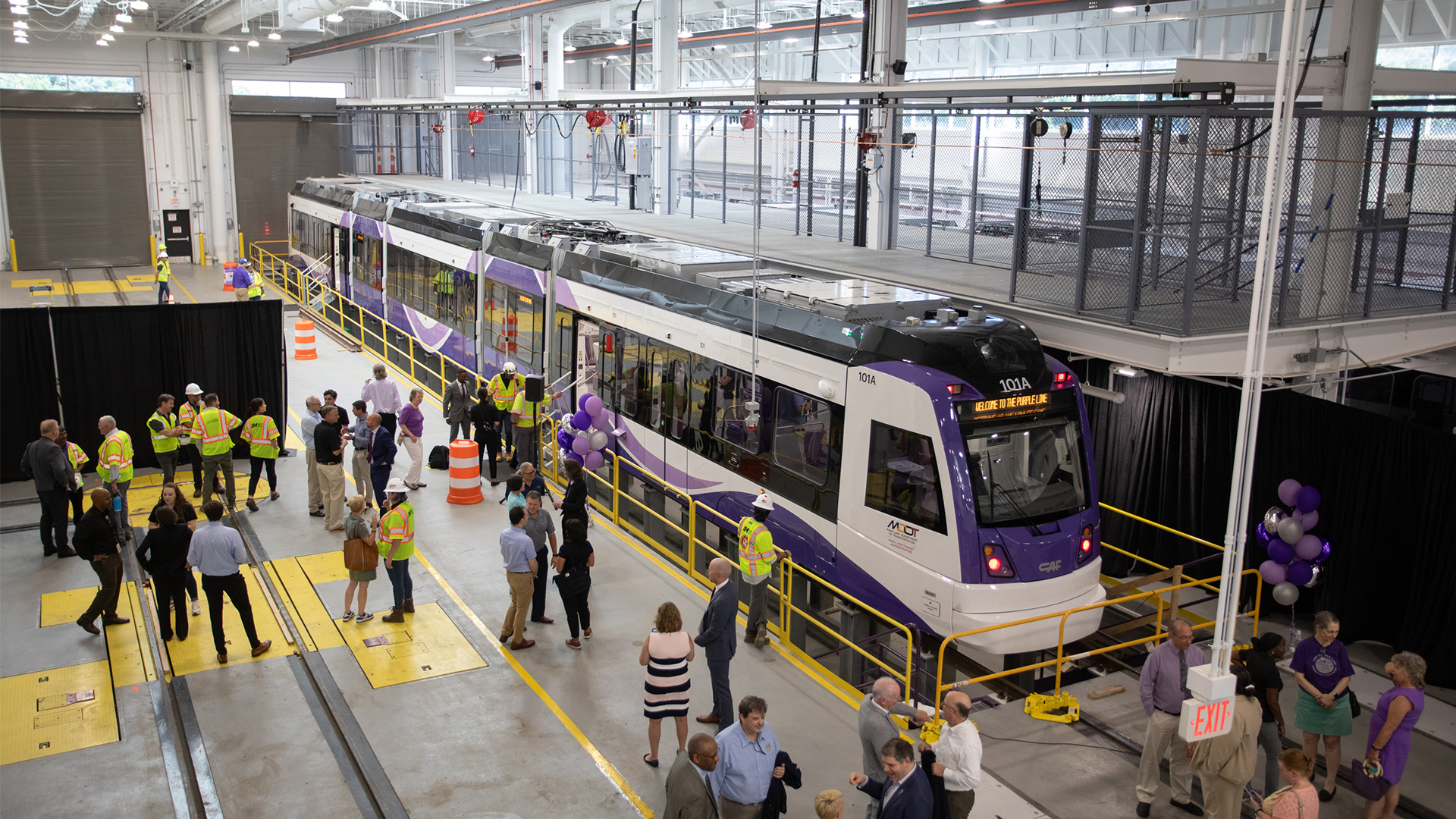
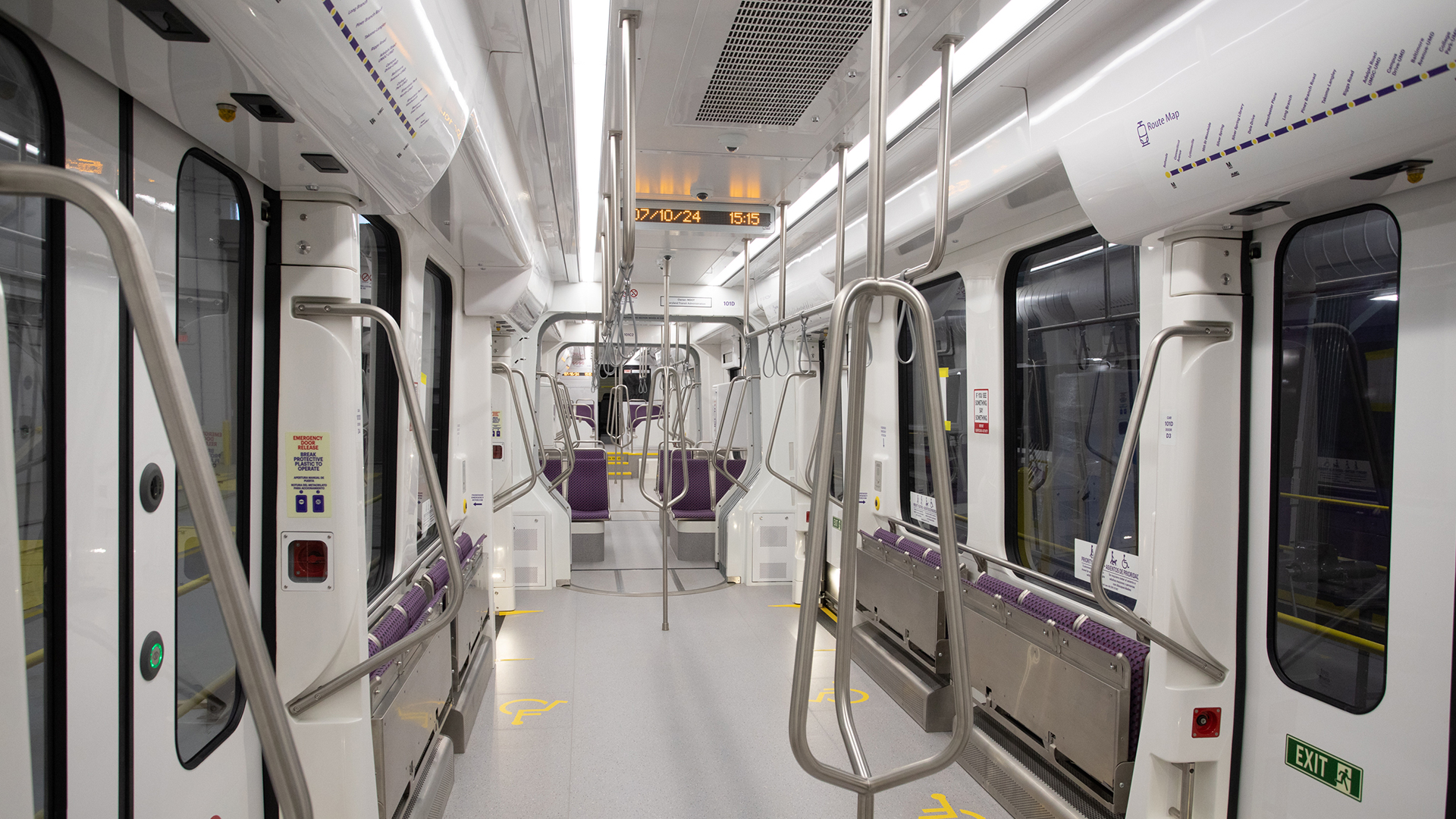
While construction continues along the corridor, dynamic testing of Light Rail Vehicles (LRVs) is underway on a one-mile test track adjacent to the Operations and Maintenance Facility in Glenridge, Maryland. The 142-foot LRVs are being evaluated for braking, propulsion, electrical, signaling, and communication systems by teams overseeing safety, operations, and engineering.
The Purple Line is designed to support community revitalization and promote transit-oriented development. Once operational, it is expected to remove approximately 17,000 vehicles from the road daily, significantly reducing traffic congestion and environmental impact.